
That Illustration Was Only a Reference: Check Asset Status Before Tin Artwork Handoff
Updated:
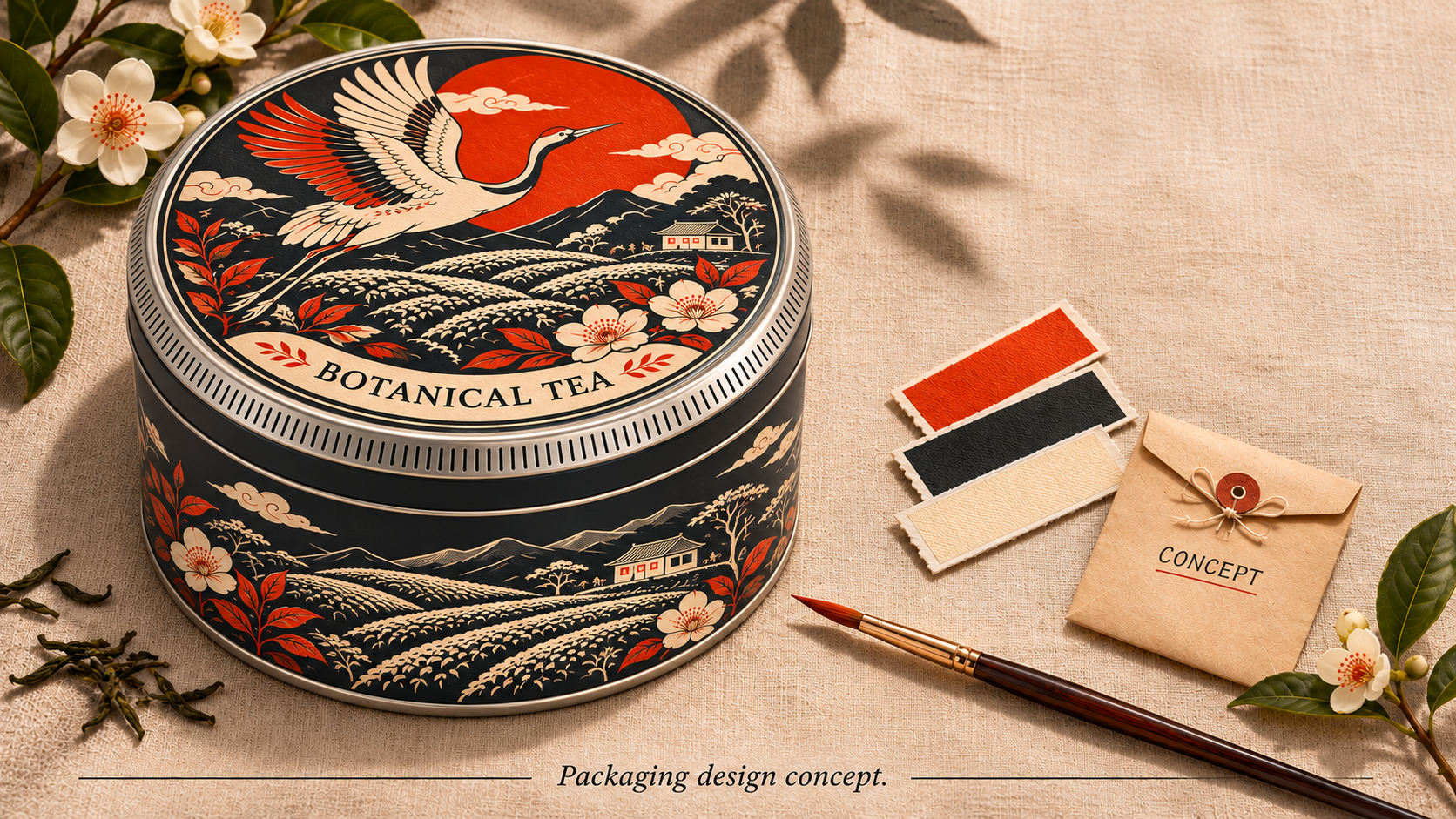

Separate production-authorised assets from visual inspiration. Possession of a design file does not establish permission to reproduce every element on packaging. This is a handoff tool, not a legal determination of rights.
Classify the supplied material
| Asset status | What to do before handoff | Avoid implying |
|---|---|---|
| Authorised for intended use | Identify owner and relevant conditions | Rights extend beyond their actual scope |
| Reference or mood-board material | State what broad preference it illustrates | It can be copied onto the tin |
| Permission unresolved | Route the question to the authorised owner | File availability settles permission |
| Generated concept | Identify concept status and intended role | It proves a real supplied product |
Resolve the affected element precisely
In a hypothetical project, an illustration enters the layout from a reference presentation. Identify it before production handoff and ask the owner to resolve use or replacement. Do not merely rename the file or ask the supplier to assume the buyer has clearance.
If it is replaced, link the corrected asset to the artwork revision and review any affected layout. A small substitution can change the composition even when the tin structure is unchanged.
Preserve a production-ready manifest
List supplied logos, illustration, photography and fonts with their responsible owner and outstanding question, if any. Keep the records under the appropriate project access arrangements. Specific licensing or legal interpretation belongs with the authorised reviewer.
Use the engineering inquiry to discuss approved decoration inputs and the catalogue for format exploration. A third-party product photograph is not permission to reproduce its distinctive design.
Can inspiration still be useful?
Yes. Explain the general direction being discussed while requesting an original response rather than copying the reference's protected elements.