
Stacked Chocolate Bars in a Gift Tin: Layered Layout or Separate Positions?
Updated:
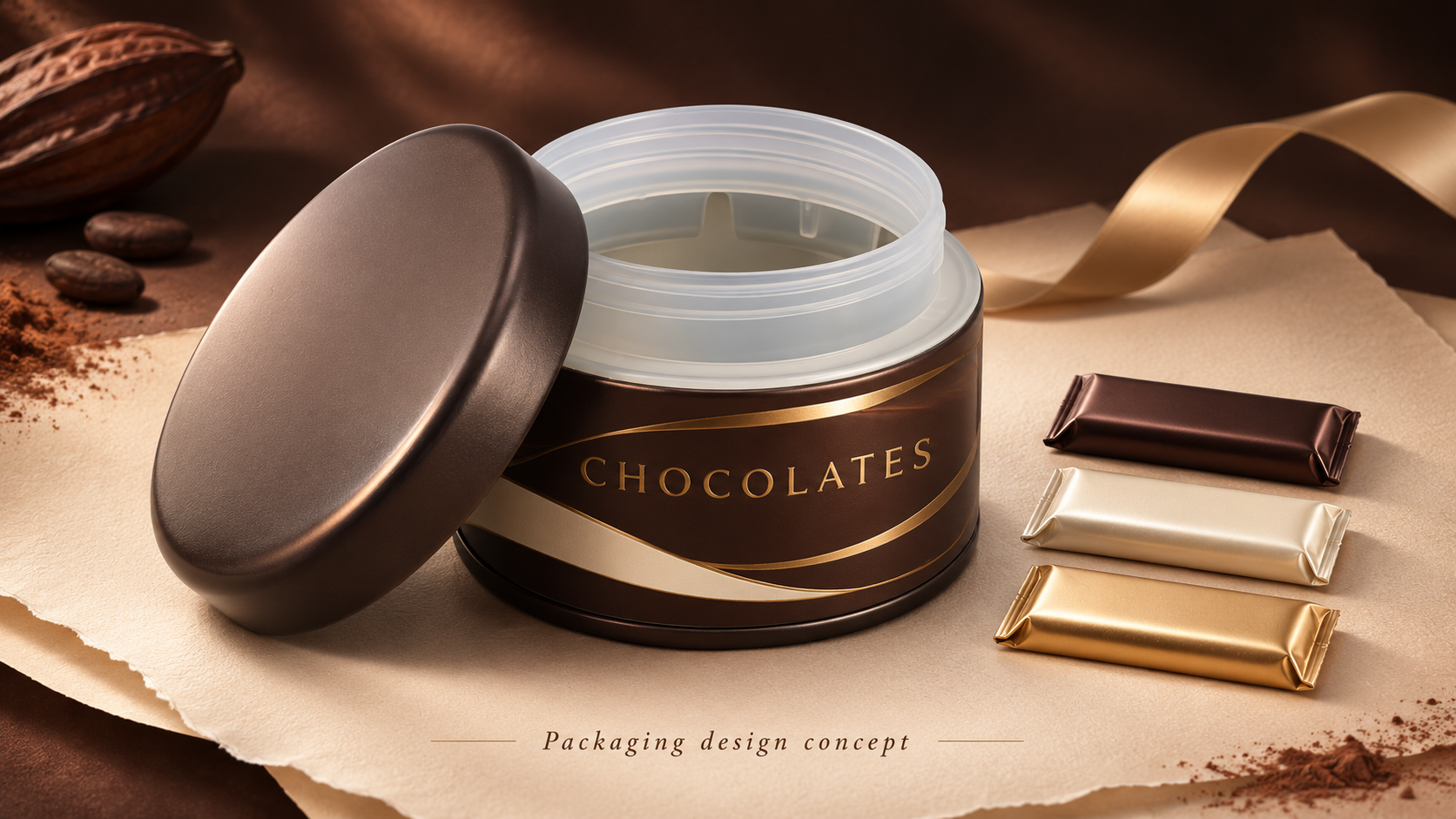

Choose the arrangement around what the recipient should see and do, not just how many wrapped bars enter the empty container. A stack, defined positions and a removable inner pack create different access, presentation and assembly tasks. Compare those complete proposals with the actual wrapped products.
Separate a neat first view from practical access
Start with the intended opening sequence. Should every variety be visible immediately? Is the recipient expected to lift a group or remove one bar at a time? Does a card need to be read before the contents are handled?
Those objectives can conflict. Showing every variety may call for a different presentation from a compact stack. Adding a layer can preserve an opening visual while creating another action before the remaining bars are reached. State which objective matters rather than asking for a universally premium arrangement.
Use wrapped dimensions and product variations
Provide the bars in their intended wrapping, including relevant folds or separate sleeves. Record the product versions and the arrangement used for each comparison. An unwrapped mock-up may help explain a concept but leaves the actual packed form unresolved.
If the assortment changes seasonally, identify whether the replacement bar occupies the same proposed location. Do not assume an unchanged outer tin makes every substituted assortment equivalent.
| Proposal | Worth considering when | Question that can change the choice |
|---|---|---|
| A wrapped stack | Sequential removal fits the intended experience | Can the first and later bars be grasped in the proposed arrangement? |
| Separate positions | Varieties should be visible or associated with locations | Do the locations allow intended removal with the actual wrappers? |
| A removable inner pack | The brand wants contents to be lifted as a group | Is that handling sequence clear, and what component and assembly scope is added? |
Distinguish appearance, identification and protection
A layout may be visually attractive without explaining which variety is which. If the product information depends on position, review how that relationship changes after removal. An assembly drawing is not automatically a consumer identification guide.
Likewise, a tidy insert does not demonstrate transport protection, material suitability or shelf life. Identify the intended product-contact arrangement and the evidence questions separately. Do not borrow a protective claim from another product or from the appearance of a sample.
Compare the decision, not just the component count
Imagine a hypothetical gift set in which a stack is easy to load but hides the lower variety. A separate-position proposal reveals both varieties but changes the presentation footprint and the placement work. Neither is automatically better.
Ask which complete proposal satisfies the brand's opening and identification priorities. Compare the actual supplied components and packing operations in the quotations. Fewer components do not by themselves establish a lower overall project cost; more components do not establish better protection.
Give the next review a use sequence
Send representative wrapped bars, the assortment and the intended sequence from opening to the last removal. Identify which experience is essential and which visual preferences can be reconsidered. Request comparisons that make those differences visible before final artwork approval.
Can we approve a layout from an empty insert photograph?
It can explain a concept. It does not represent the wrapped contents, their identification or the intended removal sequence.
Must a seasonal assortment use another tin?
Not automatically. Map the actual change to the relevant location and use task, then review the affected scope.