
Coffee Capsule Gift Tins: What Should Buyers Decide About Orientation?
Updated:
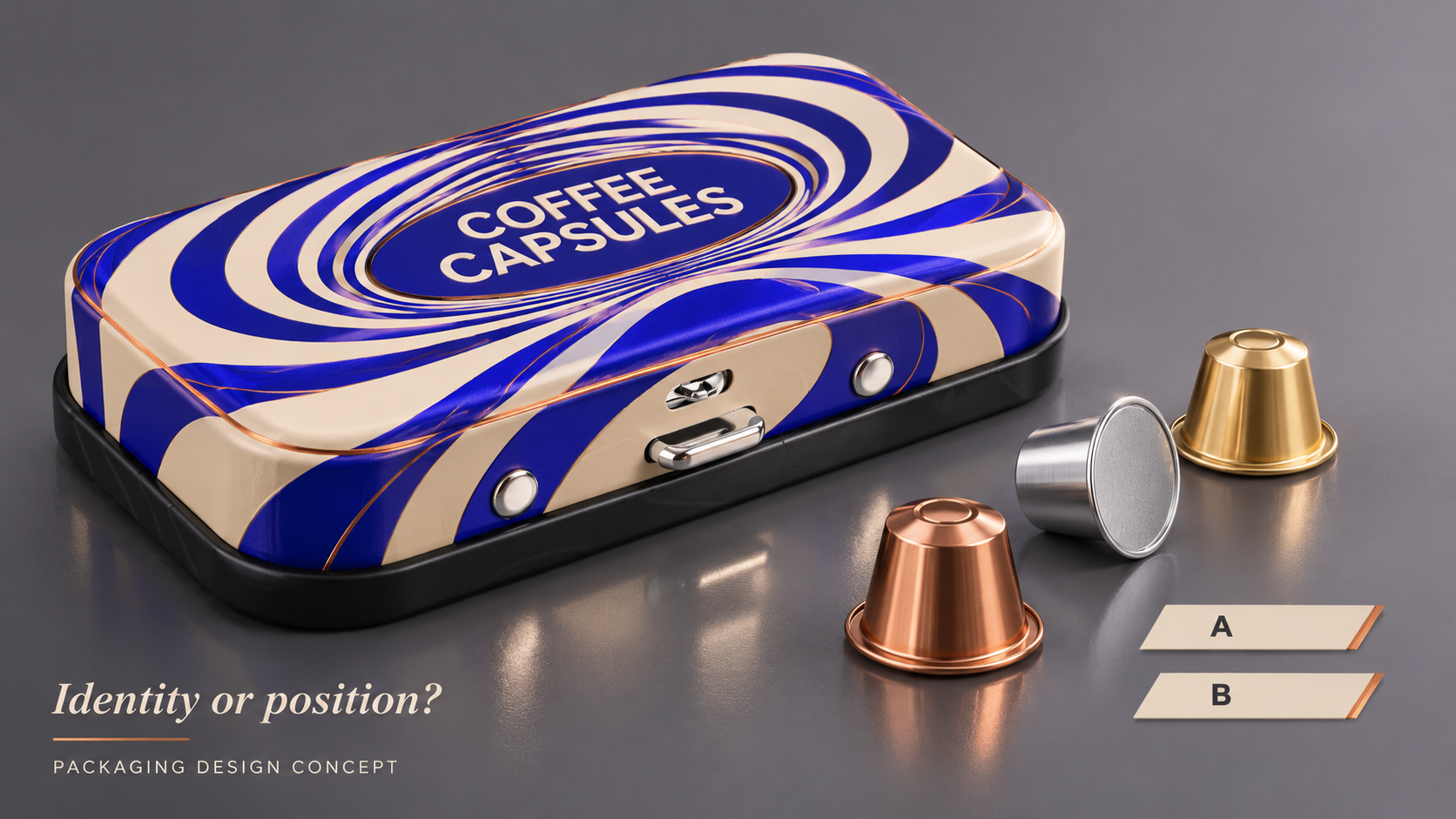

A capsule gift tin looks orderly when full, but after the first capsule is removed the team is unsure whether the remaining positions still identify the varieties. First decide whether location carries product meaning. If it does not, a fixed-position map may be unnecessary; if it does, the partial-use scenario belongs in review.
Separate display order from identification strategy
A position-based proposal asks the layout and accompanying information to work together. A proposal that does not depend on position needs another accepted way of identifying the intended contents. This is a brand-content and configuration decision, not a promise that users will never rearrange capsules. Review the proposed sequence before calling a full-pack photograph sufficient.
Capsule-position worksheet
Use this worksheet to structure a project-specific decision. It is not a test standard or acceptance limit.
| Scenario | Question | Review outcome to record |
|---|---|---|
| Full pack | Which position represents each intended item? | Identify the proposed map |
| After removal | Does location still carry meaning? | Record the observed arrangement |
| Mixed variant | Which formats were represented? | List unreviewed positions separately |
Describe the handling path
Show how capsules enter the proposed insert and how the customer should remove them. Ask the product owner to identify any relevant contact restrictions. Do not prescribe a holding force or protective claim without an appropriate assessment.
Evaluate partial use
A sampler is not always experienced only when full. Describe the intended sequence after the customer removes a capsule, including whether remaining items should stay in assigned positions. Review that scenario if it matters to the offer. Do not prescribe a universal handling test; ask the responsible team to define a suitable review for this product and proposed configuration. Record the observed arrangement after removal without turning it into a broader transport or protection claim.
Identify variant coverage
Capsules that share a marketing range may have different external features or individual wrapping. Provide the actual variants represented in the collection and identify which have been supplied for review. If a sample is unavailable, record the reference used in its place and the resulting limitation. The final decision should distinguish reviewed positions from provisional ones. That distinction is especially important when the pack will be sold as a defined assortment rather than an unrestricted selection of interchangeable items.
Prepare the next review
Send the capsule variants, position requirements and intended removal sequence. Identify which combinations the next layout review must represent.
Can one sample represent every capsule variant?
Only to the extent the responsible reviewer accepts its representativeness. Record which variants remain outside the review.
What if the brand changes the capsule assortment?
Record which formats and quantities change, then identify their positions and the associated information. Ask which parts of the earlier layout remain applicable. Do not assume a replacement capsule is physically or commercially equivalent because it belongs to the same range. Keep the revised assortment and its accepted configuration linked for the next project step.