A Collectible Tin or an Everyday Storage Tin? Choose the Later-Use Scenario First
Updated:
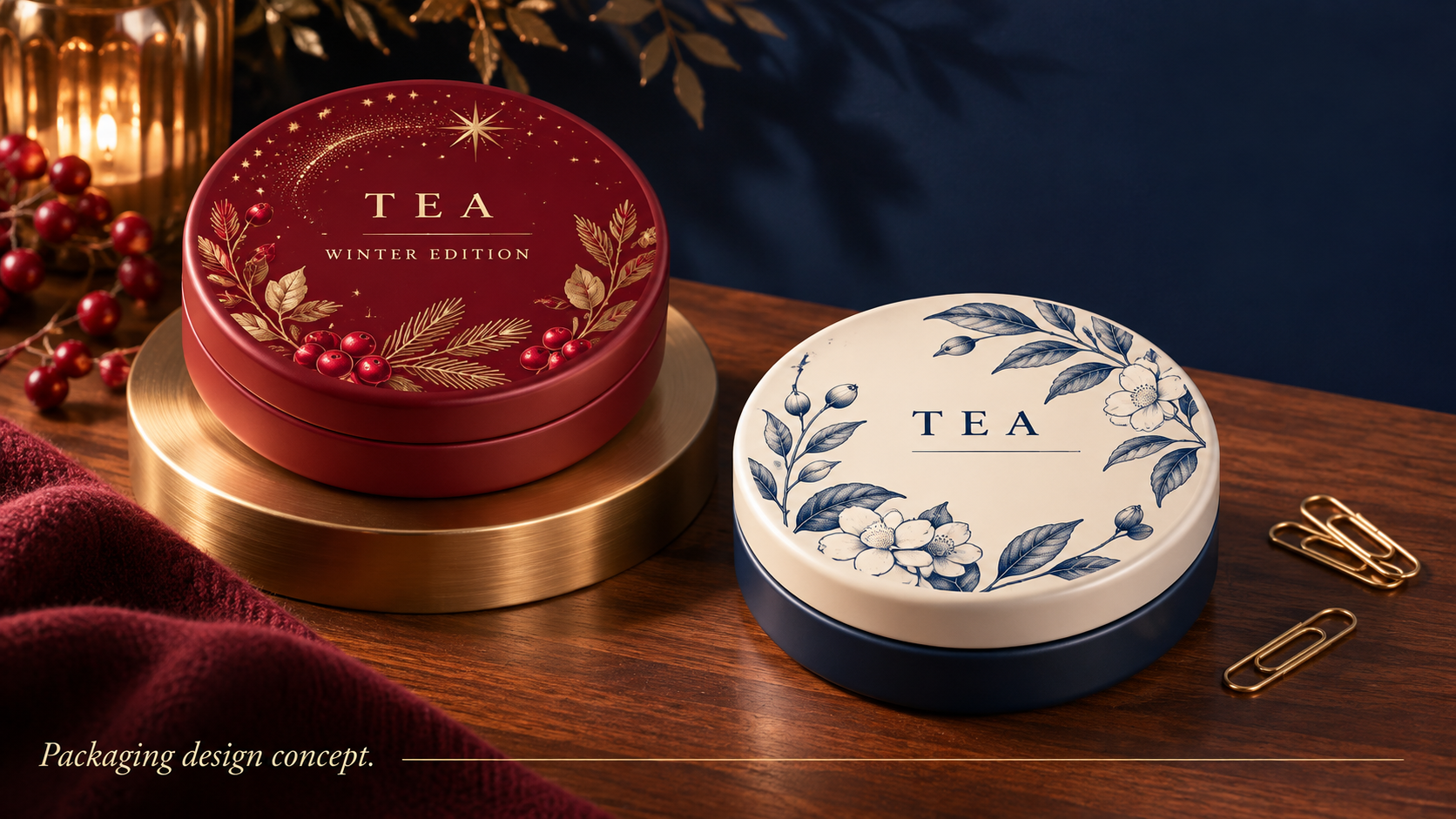
A seasonal tin can be designed as a souvenir or proposed for a particular later use. Those are different briefs. Choose the intended scenario before paying for decoration or adding a broad reusable claim: a dated anniversary design may support collecting while conflicting with a neutral everyday-storage concept.
The choice below is an editorial design tool. It does not establish consumer behaviour, environmental benefit or suitability for a new food-storage use.
Match the design to the intended reason for keeping it
For a souvenir, an event date or distinctive campaign graphic can be the point of the object. Removing that specificity simply to make the artwork timeless may weaken the concept the brand actually wants. For an everyday organiser, decide which surfaces the owner would see after the original contents are gone and whether the product-specific message still suits that setting.
A third proposal is continued storage of another food. Keep that separate: attractive decoration does not answer the actual contact conditions, materials or instructions that a responsible reviewer must assess. Do not extend evidence for the original packed product to an unspecified future use.
Use this later-use decision card
Choose one proposed later use before reviewing decoration. The scenarios below require different design decisions; none establishes that consumers will keep the tin or that the container is suitable for an unspecified future use.
| Proposed scenario | Design question to resolve | Evidence it does not provide |
|---|---|---|
| Seasonal souvenir | Is the date or campaign identity worth keeping visible? | That customers will collect it |
| Household organiser | Does the decoration still make sense without the original contents? | Universal storage suitability |
| Display object | Which face and opening state are intended for display? | Sales or repeat-purchase improvement |
| New food-storage use | What exact use and conditions are being proposed? | Food-contact suitability from appearance alone |
Compare two directions without pretending to know consumer behaviour
Hypothetical example: a tea brand debates a large holiday date on the lid. The team first chooses a seasonal souvenir concept. The date therefore belongs in the visual review; it is not automatically a defect. If the team instead chooses a neutral desk organiser, it can compare a less campaign-specific face. Neither choice proves that a buyer will actually keep the tin.
Review the proposed artwork on the actual form and identify the public sentence the brand wants to use. A precise intention such as designed as a seasonal keepsake should still undergo the brand's content review; it must not quietly become a claim of measured reuse or environmental superiority.
Send one defined concept for evaluation
Provide the intended later use, the primary visible face and the artwork choices being compared through the engineering inquiry. Ask for a proposal around that scenario. Explore tin families without assuming every format supports every later-use idea.
Should the later use be printed as an instruction?
Only after its content and intended use have been reviewed by the responsible owners. A marketing idea is not a completed instruction or suitability assessment.