
Dividers in Edible Tins: Fixed Compartments or a Removable Tray?
Updated:
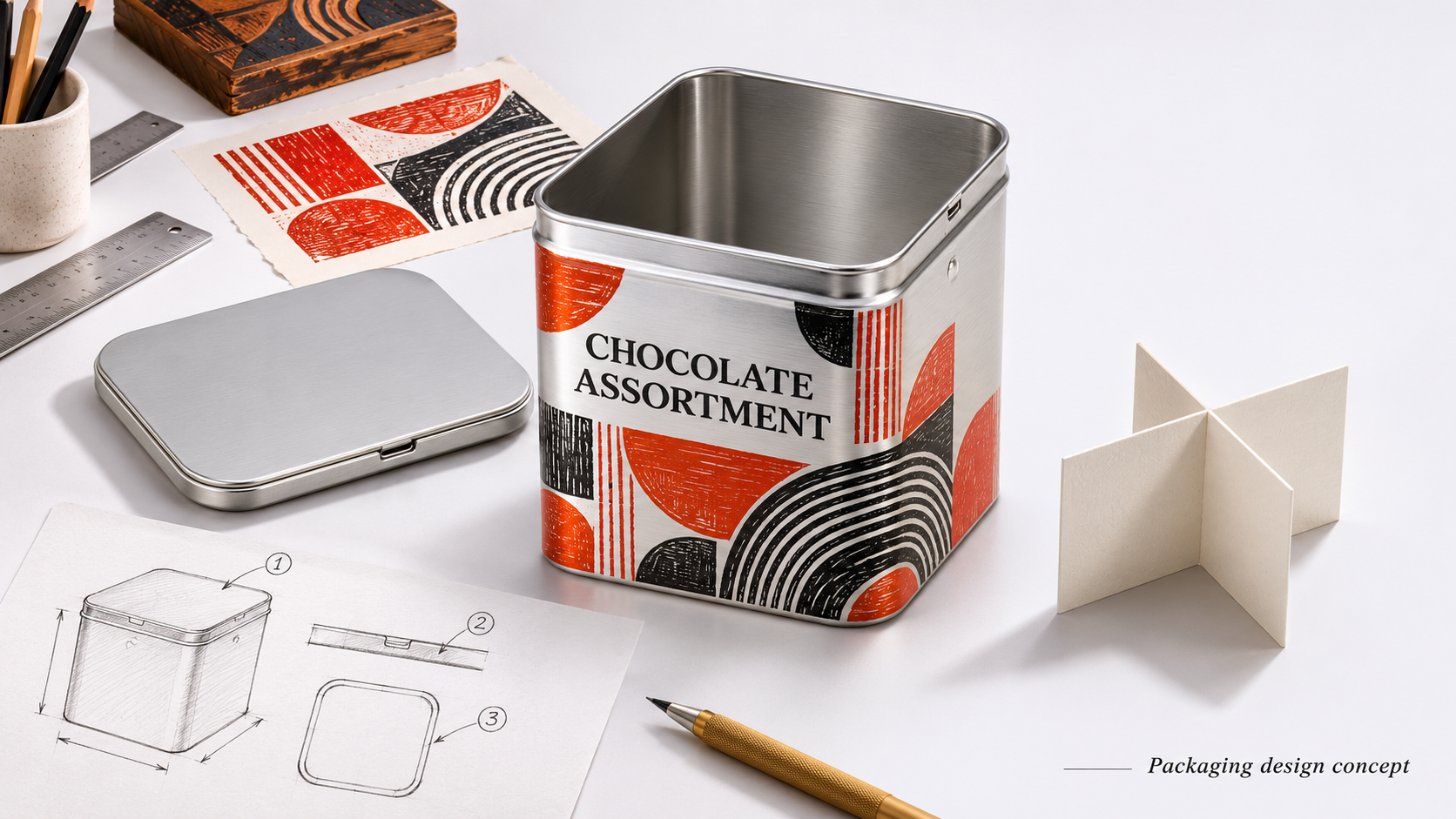

A loose divider has a lower component price than an assembled tray, but the quotation leaves assembly to someone else. The cheaper part is not necessarily the cheaper complete deliverable. Define whether compartments stay fixed or a tray should lift out before comparing scope.
Price the same work before choosing the arrangement
A fixed-divider proposal can prioritise separation in the tin while still needing access review. A removable-tray proposal introduces lifting and support questions. Neither proves protective performance. Compare who assembles, what is supplied and what the customer removes. If that scope differs, treat the quotes as alternatives until responsibilities and deliverables are explicit.
Divider review card
Use this worksheet to structure a project-specific decision. It is not a test standard or acceptance limit.
| Proposed role | Physical question | Commercial question |
|---|---|---|
| Fixed compartments | Can intended pieces be reached? | Who installs the components? |
| Removable tray | How is the loaded tray lifted? | Is assembly included? |
| Packing-only separator | What remains in the sellable pack? | Who removes it and when? |
Identify why separation is required
Separation may serve presentation, portion organisation or a packing operation. State the actual purpose without assuming it provides protection against every form of movement or product interaction. A decorative separation line and a functional partition are different project requirements. If the brand needs a particular performance, define the question and evidence separately from the appearance brief.
Review the loaded component
A divider viewed on its own does not reveal how the assortment will be loaded and removed. Put the intended products or wrapped units into a representative assembly. Observe whether a removable tray can be lifted as planned and whether a fixed divider obstructs access. Record where the assembly is supported during those actions rather than attributing a problem immediately to material thickness.
Clarify component supply and assembly
Specify whether the supplier delivers assembled tins, loose dividers or complete packed units. State who will place the divider, check orientation and deal with a misaligned part. A supplier quotation can otherwise appear comparable while covering a different amount of work. Request the component references and packing condition so purchasing can compare the same scope.
| Decision | Record |
|---|---|
| Purpose | Presentation organisation or packing task |
| Component | Fixed divider or removable tray |
| Supply scope | Loose assembled or packed configuration |
Plan what changes between assortments
If a compartment changes for one product variation, determine whether the entire insert or only one component is affected. Maintain a reference for each approved layout. Avoid treating a divider swap as a cosmetic change when it alters access or contact interfaces. A clear revision record gives the packing team a way to distinguish visually similar arrangements.
Compare component costs with the work they create
A hypothetical quotation offers a loose divider at a lower component price than an assembled tray. That does not settle which proposal fits the operation. Ask the packing organisation to describe the additional assembly, orientation and identification work under each option. Keep any cost comparison based on real quoted scope and the operator’s own information. Do not invent a labour saving from the component drawing. If the lower-price option requires an activity that nobody has accepted responsibility for, the purchasing brief is incomplete even though the unit prices look easy to compare.
Turn the review into a purchasing brief
Identify the divider purpose, whether it remains fixed or is removed, and who supplies and assembles it. Compare quotations only after the component and assembly scope are aligned.
Is a divider automatically a protective insert?
No. Its intended function and any associated performance need to be established.
Can different layouts share one tin?
Potentially, but each proposed assembled configuration still needs review.