
Edible Tin Loading Orientation: Design the Handoff to the Packing Team
Updated:
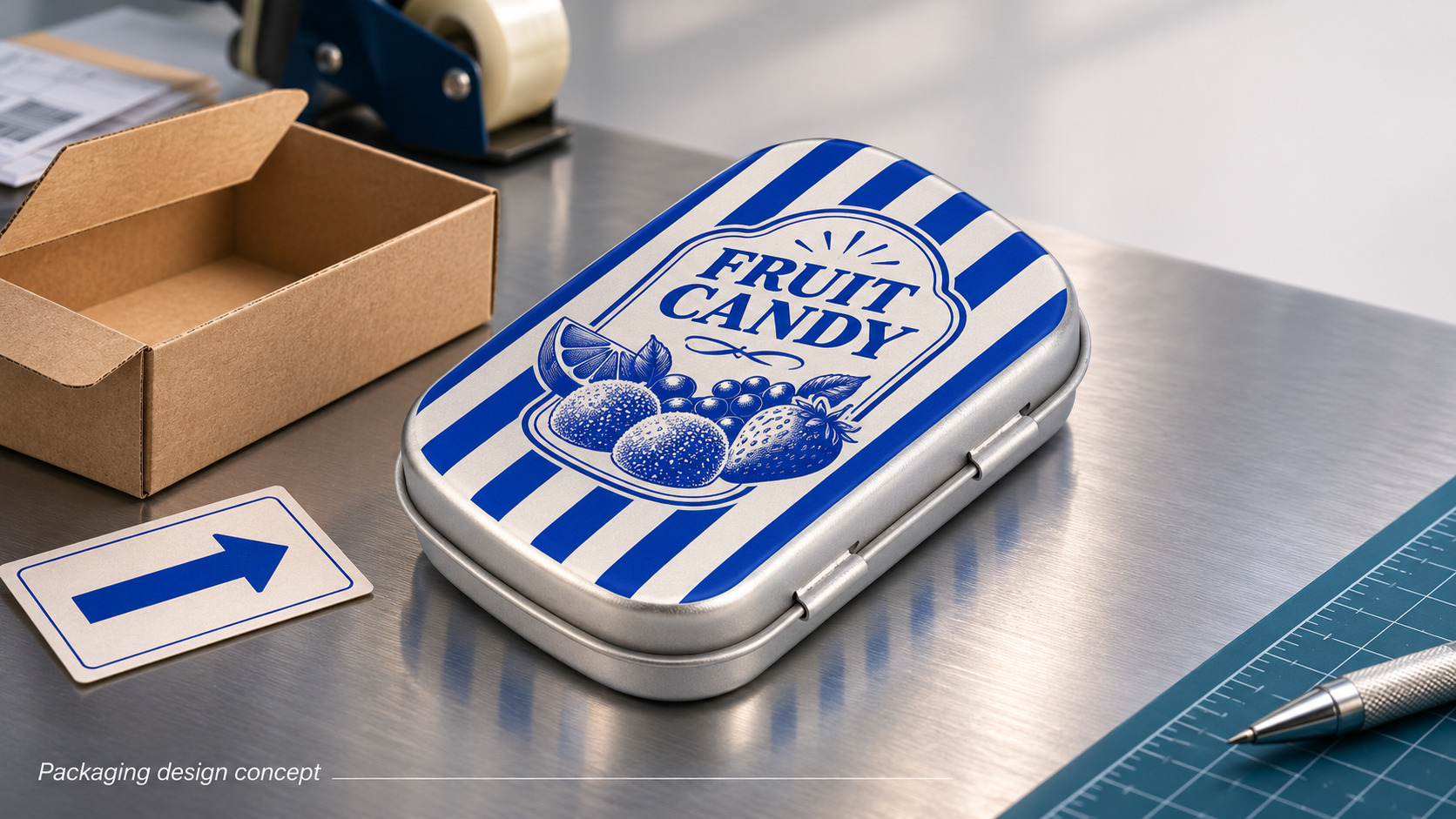

The carton sketch presents tins one way while the packing sketch expects the opposite orientation. Before changing the tin, determine whether an intentional turn is part of the workflow or an unresolved handoff. A different supplied state may answer the issue without changing the structure, but it must be proposed and reviewed.
Compare supply-state and structural routes
A supply-state proposal changes how components reach the operation. A structural proposal changes the package itself. Compare both against the actual loading and closing task; neither automatically increases speed. Record which orientation is visual, which is needed for handling and who accepts any additional step. A walkthrough identifies questions, not a measured productivity result.
Orientation reconciliation
Use this worksheet to structure a project-specific decision. It is not a test standard or acceptance limit.
| Reference | What to mark | Decision |
|---|---|---|
| Carton proposal | Delivered component state | Accepted receiving arrangement |
| Workstation sketch | Intended starting position | Any turn between delivery and loading |
| Finished presentation | Lid and contents direction | Relationship actually required |
Describe the receiving position
Start with how components arrive at the workstation. Show the intended position of the body, lid and insert, and identify the surface the operator uses to recognise orientation. A drawing of the final closed package does not answer those questions. Purchasing should give the supplier the working context so assembly options can be discussed on the same basis.
Follow the loading sequence
Write the proposed sequence in ordinary actions: orient, place the inner pack or products, inspect the arrangement, close and place into the next container. Look for steps requiring the operator to turn or reopen the package. Such observations identify review questions; they do not prove a bottleneck or quantify savings without a representative trial.
Coordinate decorative direction
If the lid image has a defined front, decide how that front relates to the contents and carton orientation. A symmetric empty body can make several positions look interchangeable until printed components are introduced. Use clearly identified samples to communicate the relationship. Do not rely on an unlabelled photograph that another team may interpret from the opposite viewpoint.
| Decision | Record |
|---|---|
| Handoff | Component condition at workstation |
| Sequence | Orientation loading review and closing |
| Trial | Operator observations and sample references |
Test the supplied configuration
Have the actual packing organisation review a representative configuration in the intended supplied condition. Record difficulties and the exact component versions used. Changing how parts are delivered may address a handling issue without changing the tin; changing the structure may be necessary in other cases. Compare those options before attributing every extra action to the package design.
Resolve a conflicting orientation before the trial
Suppose a packing sketch shows the printed lid facing the operator while the carton sketch turns the finished tin in the opposite direction. Neither drawing alone explains whether an extra turn is intended. Put the sketches together and identify the reason for the change in orientation. The team may accept that action, revise the supply condition or alter the presentation. What matters is making the choice visible. Keep the observed handling task separate from any future production-rate claim, because an informal walkthrough does not establish the performance of the complete packing operation.
Turn the review into a purchasing brief
Send the proposed workstation handoff, loading sequence and relationship between lid graphics and carton orientation. Ask the packing organisation to identify which representative configuration it needs for a workflow review.
Can a supplier predict our packing speed from a drawing?
A drawing alone does not establish actual operating performance.
Is open delivery always preferable?
No. Compare it with storage handling and the actual packing workflow.