
Food Gift Tins with Paper Bands: What Must the Packaging Brief Separate?
Updated:
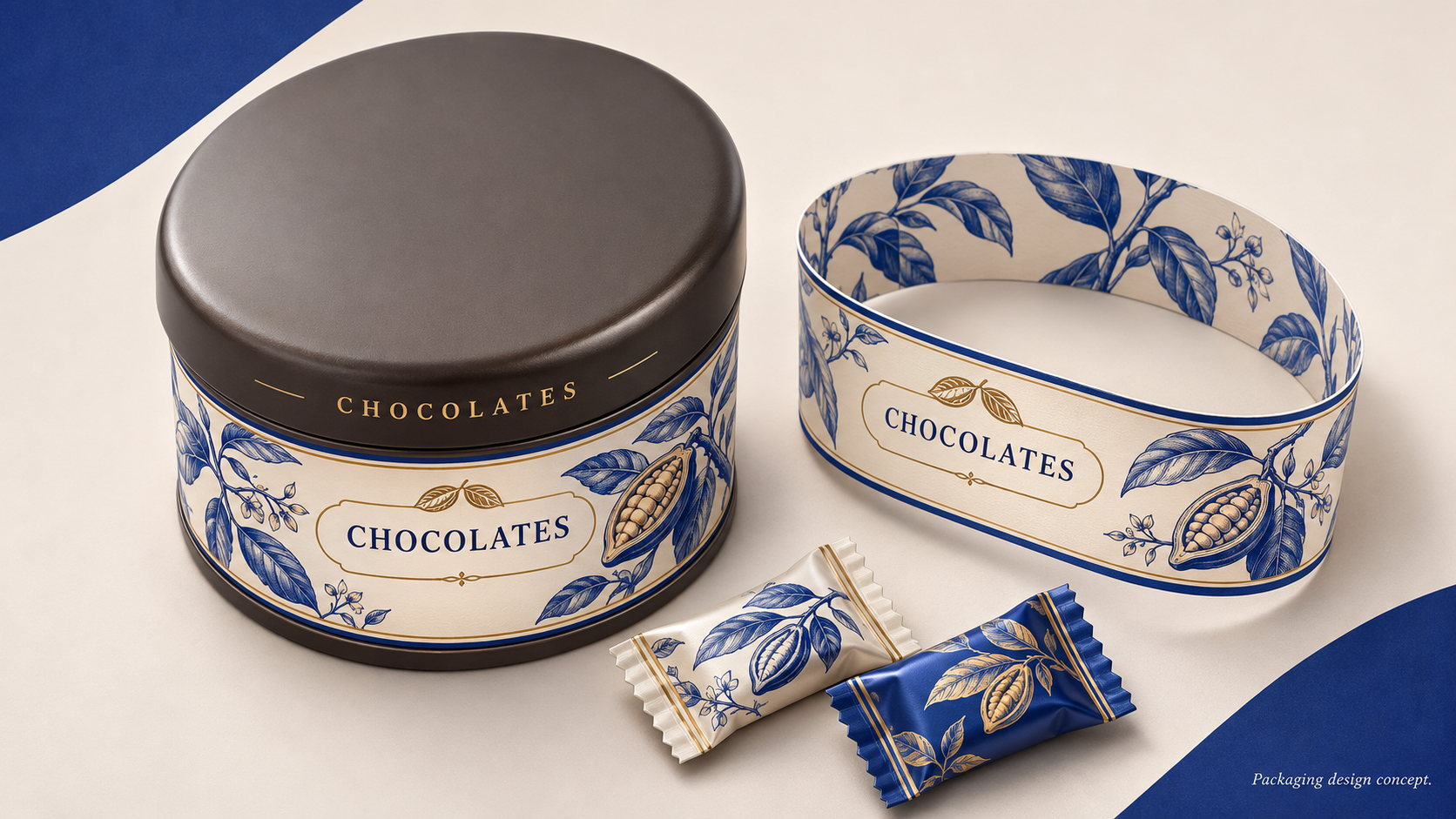

A new paper band names the current collection while the tin underneath still describes an older offer. Covering the message does not by itself settle what the customer sees after removing the band. Review the combined presentation, not just the newest file.
Band-and-tin pairing tool
Use this worksheet to structure a project-specific decision. It is not a test standard or acceptance limit.
| Moment | Information to show | Decision |
|---|---|---|
| Before removal | Tin and band visible together | Does the combined offer match? |
| After removal | Exposed tin information | What requires content review? |
| Application | Tin and band revisions | Who assembles the accepted pair? |
Resolve a hypothetical mismatch
The tin artwork changes but an older band still names the previous collection. Treat the combined presentation as unresolved. Link the band and tin revisions rather than assuming approval of either component authorises the pair.
Define the application responsibility
State where and by whom the paper band will be fitted. A band supplied loose for the brand's assembly team is a different deliverable from a band already applied around a packed unit. Identify the requested state in the quotation brief and sample record. This prevents a comparison between proposals that include different assembly work. It also clarifies who needs the physical references and who can report an observation about the complete presented pack.
Review the removable information
A removable component can disappear before or during use. Identify what the brand intends the tin to communicate after that happens and ask the content owner to review the proposed split. Do not make a legal conclusion about which information may be removed. The procurement task is to show the actual sequence and component relationship so an authorised reviewer can decide. A combined mock-up is useful only when it clearly identifies the versions and the status of the text being shown.
Record the combined reference
Create an identifiable pairing between the tin artwork and band artwork for each proposed selling unit. If one changes, ask which combination should proceed to the next review. For example, a new collection name on the band may coexist with unchanged decorative graphics, but an older product description may no longer match the contents. The reviewer needs the complete proposal, not an assumption that the band overrides everything beneath it. Keep those decisions in the handoff rather than relying on visual similarity.
Prepare the next review
Identify the tin and band revisions, application responsibility and intended removable information. Request review of the complete paired presentation.
Does a band replace tin artwork approval?
No. Each component and their intended combination need identifiable review status for the scope being approved.
What should a band revision notice identify?
Name the affected tin, band artwork, contents and intended assembled presentation. State which element is unchanged and which needs review. If old bands remain in stock, identify them separately rather than assuming a new attachment removes their relevance. Ask the authorised owner to decide the next accepted combination and record its scope clearly for assembly.