
Before a Larger Tin Order: What Should a Packing Trial Actually Resolve?
Updated:
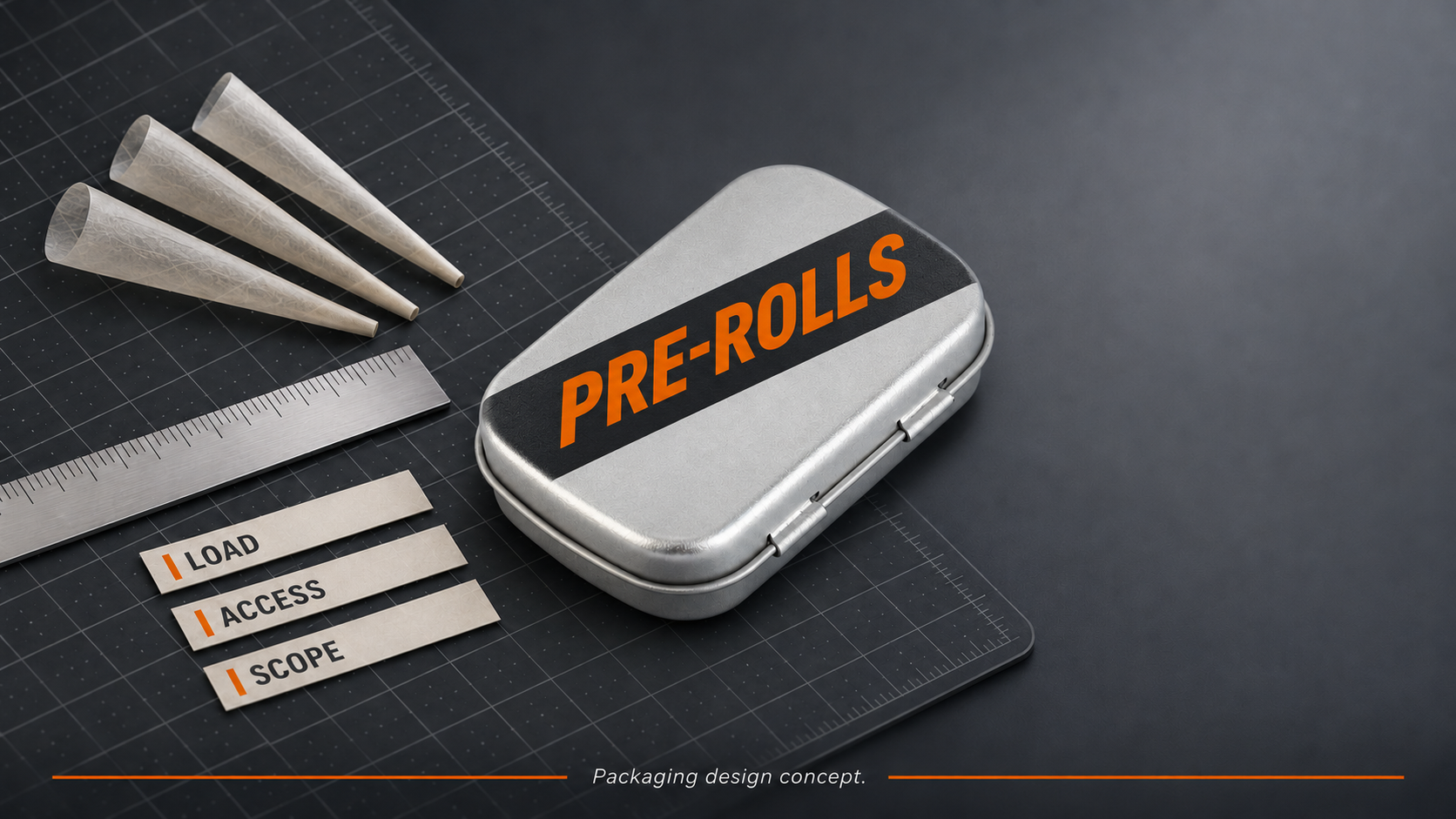

A trial is useful when its result can change a purchasing decision. Define that decision before arranging samples: choose between two loading arrangements, investigate a specific access problem or decide whether an outstanding operation belongs in the quoted scope. A general demonstration that the product can be packed leaves those questions open.
This guide organises a project comparison. It does not set a sample size, test duration, acceptable defect rate or production-release standard.
Write the question as a choice
Replace try the packaging with a question such as whether a pre-assembled insert or local assembly is appropriate for the proposed handover. State the starting condition and the finished condition for each route. If one proposal includes more work, its result cannot be interpreted as a direct comparison with a proposal that stops earlier.
Ask the relevant owners to identify essential outcomes and constraints. A visual preference may be reconsidered; an agreed product configuration should not change unnoticed during the trial.
Control the differences you intend to compare
Use identifiable products, components and revisions. Record which variable differs between candidates and which inputs should remain equivalent. If several things differ, describe the comparison as a choice between complete proposals rather than a test proving one isolated cause.
| Trial question | Comparison to make explicit | Purchasing decision it supports |
|---|---|---|
| Which loading arrangement is practical? | Same intended contents with the proposed sequences identified | Which layout deserves the next development step? |
| Who should assemble components? | Equivalent starting and finished conditions, with work boundaries listed | What scope should each supplier quote? |
| Does a revision address difficult removal? | The use state that exposed the problem, not only a full display sample | Is the proposed access change worth continuing? |
| What if results disagree? | Product, component, operator instructions and observation differences | Is more comparison needed before selecting a route? |
Record an outcome that is narrower than a guarantee
Suppose a hypothetical comparison finds one loading sequence easier for the participating team under the agreed setup. That observation can inform the next proposal. It does not establish a universal packing speed, labour saving or performance across every future production condition.
Record what happened, the relevant conditions and exceptions. A video may show an action clearly, but does not replace the reference identity or define a statistical result. Do not convert a small demonstration into a defect-rate or throughput claim.
Decide what happens after each possible result
Before the trial, identify what would justify selecting a proposal, requesting a revision or collecting more information. If the result cannot alter any decision, reconsider why that trial is being performed.
Keep physical, artwork, commercial and evidence approvals separately identifiable. Selecting a candidate for further evaluation does not release production. A trial may resolve loading while leaving documentation or decoration decisions open.
Turn the result into the next purchasing scope
Summarise the selected candidate, the unresolved conditions and the work required to reach the next stage. Ask for a quotation against that identified scope rather than carrying over assumptions from an earlier concept.
For a project discussion, send the decision question, candidate configurations, comparison inputs and intended next action for each outcome. These make the trial interpretable without inventing acceptance values.
How many samples should the trial use?
The appropriate plan depends on its purpose and relevant requirements. Have the responsible team define it; this article does not prescribe a universal count.
Can we order after a successful demonstration?
Check which decisions it actually resolved and which approvals remain. A favourable observation does not automatically complete the purchasing and release process.