
Food Tin Window Requests: What Question Should Buyers Ask Before Choosing a Format?
Updated:
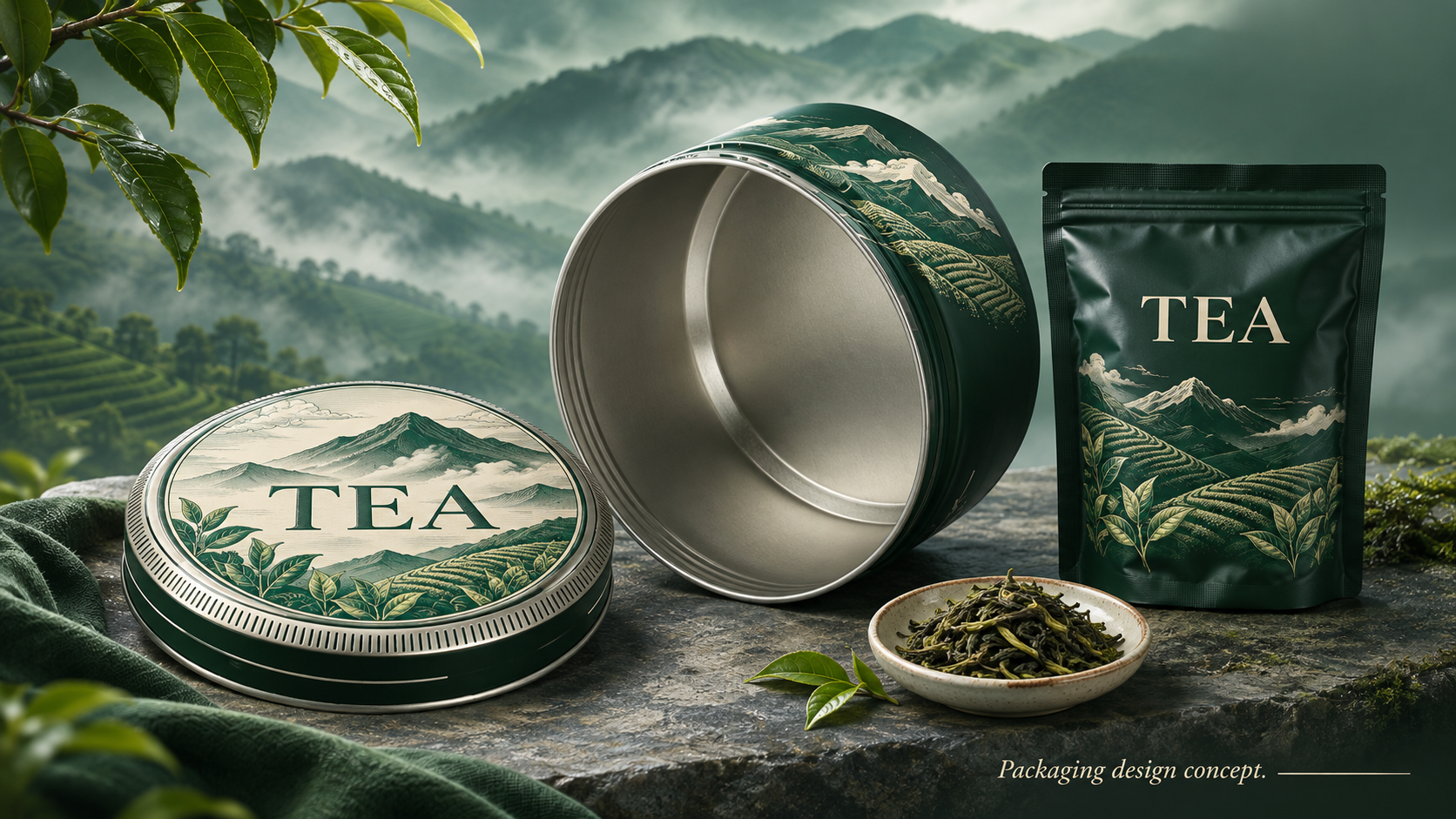

A windowed concept shows the food, but the final product is inside an opaque inner bag. The proposed feature may no longer deliver its intended visual purpose. Resolve what the customer should actually see before committing to a structural feature.
Choose what the customer should see
Decide whether the feature is meant to show the food itself, individual wrapping, inner-pack branding or simply a product story. These are different briefs. Show the intended packed arrangement and identify the proposed viewing face.
If the contents are inside an opaque pouch, a window may show only that pouch. First decide whether that view still serves the brand's objective. Do not change an inner package merely to reproduce a rendering without the responsible product review.
Write the visibility brief before choosing a lid
Use this worksheet to compare the visual objective with the actual packed state. It is a decision aid, not a technical specification or a performance result.
| Desired view | Actual packed state | Decision |
|---|---|---|
| Food itself | Opaque inner pack | Resolve the conflicting objective |
| Inner-pack branding | Identified wrapper or bag | Review the real visible arrangement |
| Product story rather than contents | External graphics proposal | Review accurate content and appearance |
Compare a window proposal with an artwork-led proposal
Request two identified concepts when both remain plausible: a proposed window arrangement and an opaque presentation using exterior graphics or product information. Compare what the customer would actually see, which components each proposal includes and what questions remain unanswered.
Do not assume the windowed option costs less, uses equivalent materials, provides the same protection or accepts the same decoration. Obtain the actual scope and supporting information before assigning those benefits to either route.
Use the final inner pack in the sample review
Consider a hypothetical concept showing chocolates directly beneath a windowed lid. The product is later moved into an opaque inner bag. Review that revised packed state before continuing with the earlier visibility concept. Possible next steps are to retain the window because the intended bag branding is visible, revise the proposed layout, or compare an opaque lid and exterior artwork. None follows automatically.
If a later change introduces a different pouch, wrapper or product position, identify the changed reference and revisit the visibility task. Keep visual acceptance separate from material and performance review.
Send a visibility request the supplier can evaluate
Provide the proposed contents and inner-pack references, the intended position, the viewing face and a short statement of what must be visible. Request the body, lid and additional component scope for each candidate, with a sample that represents the proposed packed state.
The next decision should establish whether the concept delivers the intended view and which technical questions still need review. A successful campaign image alone does not answer either question.
Can the window be added after structural approval?
Treat it as a changed proposal. Ask which drawings, components, documents and sample decisions need reassessment.
How should the visibility concept be documented?
Show the proposed packed state and identify exactly what should be visible. Include the inner wrapping reference and any provisional assumption. Ask the design owner whether that view supports the intended customer message. Keep the visual objective separate from material and performance conclusions so the rendering does not silently become evidence for functions it cannot demonstrate.