
A Gummy Tin Holds the Weight but Not the Pieces: What Should Buyers Specify?
Updated:
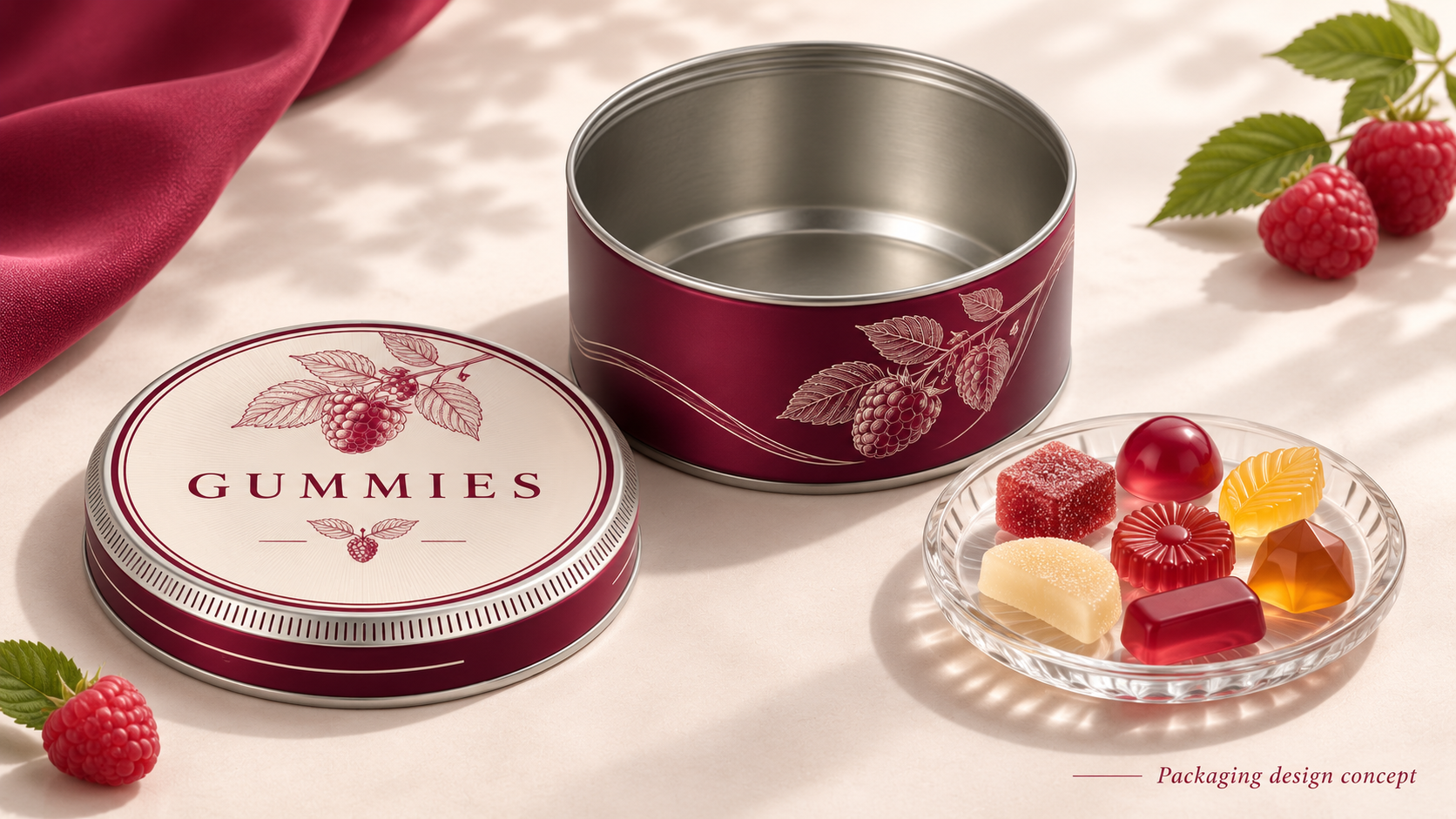

A target weight does not describe the arrangement of the actual pieces. When a candidate appears large enough in a catalogue but the intended gummies do not pack as expected, distinguish the commercial contents from their physical form. Provide count, relevant weight specification, piece geometry and inner packaging together.
This guide helps select review inputs. It supplies no universal weight-to-volume conversion, fill limit or material-suitability conclusion.
Decide what the sellable pack promises
If the offer specifies a piece count, that count belongs in the packaging brief. If it is sold by weight with variable pieces, the product owner needs to explain the intended variation. Do not ask the packaging supplier to invent the relationship between the two.
Identify whether each piece is wrapped or whether a filled inner bag enters the tin. Keep the packed form attached to the product reference. A loose-piece layout and a bag-in-tin proposal are different configurations even if their target weights match.
Find the input that changed
Compare the product used for the first discussion with the product in the failed review. A changed shape, wrapper or arrangement can matter even when the weight printed in the brief remains the same.
| What stayed the same | What may still differ | Purchasing question |
|---|---|---|
| Target weight | Piece shape or count | Does the proposal represent the intended product range? |
| Piece count | Individual wrapping and occupied shape | Which packed form was used for the layout? |
| Tin reference | Inner bag or tray arrangement | Is the reviewed complete configuration the quoted one? |
| Full-pack appearance | How pieces are removed during use | Is the remaining access acceptable for the intended experience? |
Compare arrangement choices before assigning capacity
A loose arrangement may suit a pack whose offer depends on total contents rather than exact locations. A defined-position proposal can make an assortment easier to map, but creates location-specific fit and access questions. An inner bag changes the object being placed and removed from the tin.
Compare those routes against the actual product presentation and handling priorities. Do not describe a tin as holding a particular weight for every gummy merely because one trial arrangement accommodates one product.
A product revision can invalidate a familiar number
In a hypothetical project, the target weight stays fixed while the product changes from one shape to another. The earlier tin reference remains a useful candidate, but its former placement observation does not describe the revised contents.
Update the product version and state which arrangement needs review. If the team wants to preserve the container, ask for a proposal using the changed product. If another container is suggested, compare its actual components, artwork and packing scope. Do not silently change the sellable count to make a photograph look successful.
Make the next sample answer a defined question
Agree which product variations and packed forms the review needs to represent. Observe placement, closing and intended removal as separate questions. Keep any material-contact, barrier or child-resistance requirements in their own evidence review.
Send the product reference, count or weight basis, representative shape information and intended inner packaging. Explain whether the unresolved task is loading, arrangement or removal. That is a stronger starting point than asking how many grams a tin holds without identifying the contents.
Can another brand's capacity description be used for our gummies?
Treat it as a research lead, not your own specification. Identify the product and configuration behind the description before using it in selection.
What if the final pieces are not available yet?
Discuss candidates provisionally, identify the missing product input and keep the affected fit decision open.