
Loose Tea and Tea Bags: When Should a Collection Use Separate Tins?
Updated:
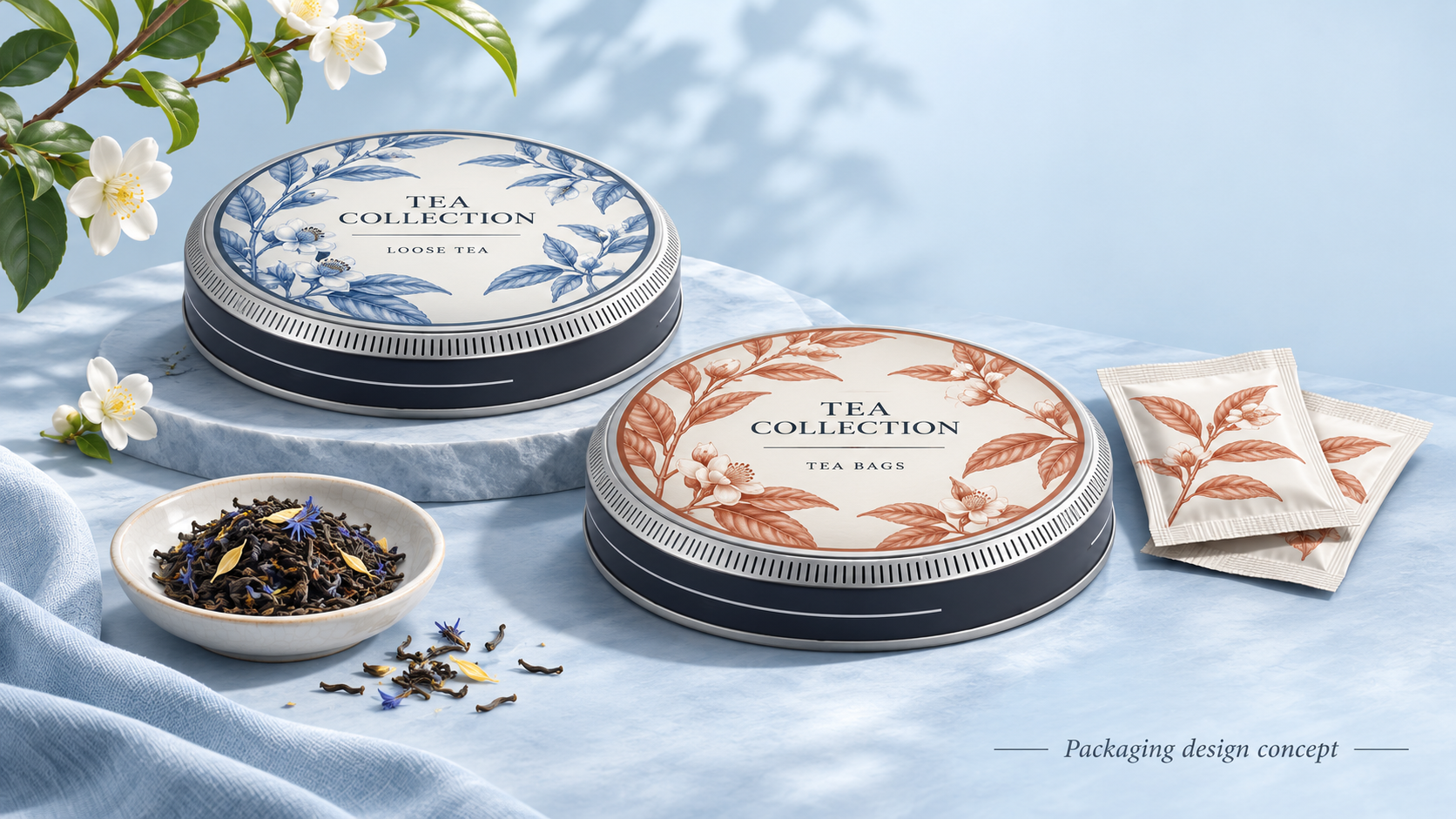

A brand wants one tea tin across loose-tea pouches and wrapped tea bags, but one SKU is awkward to remove. That exception does not automatically invalidate a common-body project. It means the team must decide whether physical commonality or a unified appearance is the real objective.
Choose the kind of commonality that matters
A shared body with distinct internal arrangements keeps some container references common but leaves SKU-specific review work. Distinct bodies with a common visual system preserve collection identity while allowing different physical proposals. Compare the actual components and quantities before calling either simpler. A common graphic theme should not force an unresolved pouch-access problem into production.
Commonality decision sheet
Use this worksheet to structure a project-specific decision. It is not a test standard or acceptance limit.
| Brand priority | Physical proposal | Next review |
|---|---|---|
| Same body | Shared tin with identified inner arrangements | Review each packed form |
| Same visual collection | Distinct bodies with common design language | Review appearance and each configuration |
| Unresolved SKU exception | Alternative inner arrangement or body | Resolve the actual removal task |
Review the exception
In a hypothetical collection, wrapped bags are easy to remove but a loose-tea inner pouch cannot be grasped in the same container. That is a specific access issue. Ask for a revised proposal for that SKU rather than rejecting or approving the entire collection together.
Compare the packing work
Ask the packing owner to describe how loose-tea pouches, wrapped bags and sachet stacks enter the proposed container. Include any intermediate sleeve or presentation card. An arrangement that looks equivalent after packing can involve different assembly tasks before closing. Compare those tasks and the corresponding supplier scope before deciding that one shared format simplifies the project. Do not assign a labour or cost advantage without a project-specific proposal and an identifiable operating assumption.
Keep a SKU-level exception register
For each tea form, record the representative contents, packaging reference and unresolved review question. If one SKU needs a different inner component, show that distinction explicitly in the order brief. A collection approval should not hide the exceptional item behind a family name. When product form changes later, start with the affected row rather than reopening every unchanged design automatically. This gives both teams a bounded review task while keeping the physical variation visible.
Prepare the next review
Send the actual packed forms and quantities by tea SKU. Ask which proposals share a body and which need separate internal arrangements.
Does one artwork theme require one tin size?
No. A visual theme can span distinct configurations. Identify the physical reference attached to each design.
How should a comparison request be presented?
Send separate rows for loose tea, wrapped bags and sachet stacks, including representative references and intended quantities. Ask the proposal to identify what is shared and what differs. Keep any unreviewed form labelled provisional instead of using the family name as evidence that the complete collection has been assessed against one container.