
Mint Tin Opens Easily, but the Mints Are Hard to Get Out: What Should Change?
Updated:
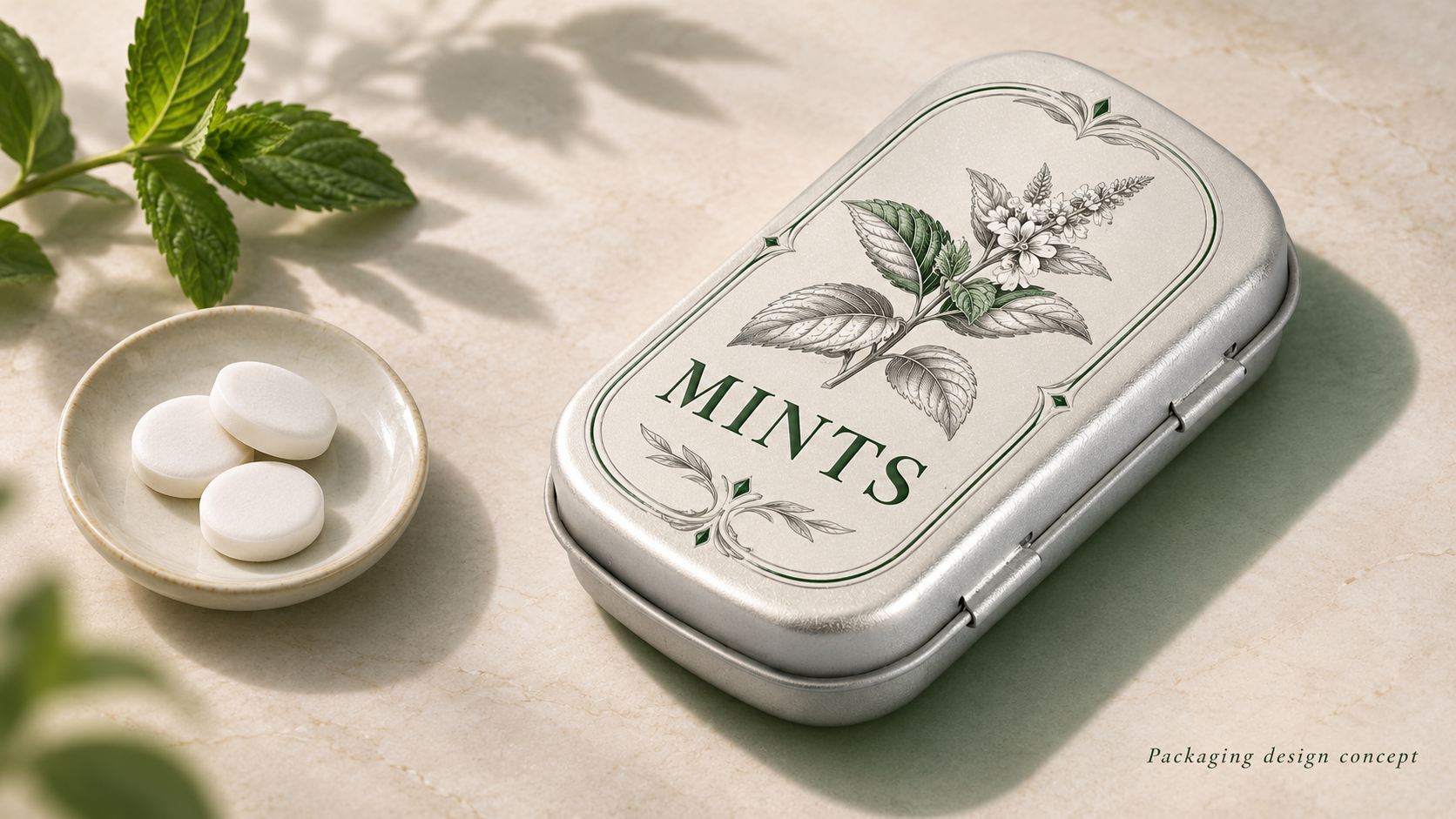

Separate opening the container from removing the contents. If the lid operates as intended but the product path is awkward, changing the closure may not address the problem. Define whether the customer is meant to pour, pick an individual mint or remove an inner packet, then compare that action using the assembled pack.
Why two reviewers can disagree
One reviewer tips the tin while another reaches inside. Their reports may be honest but answer different questions. Before comparing samples, have the product owner state the intended action and whether an alternative action is also part of the brief. Use the actual contents or an identified representative assembly. Avoid converting one person's preference into a claim about every user or a broader accessibility conclusion.
Locate the point at which the action breaks down
For a pouring proposal, observe how the intended contents leave the assembled pack and what remains. For picking, observe where the person reaches and how the piece is withdrawn. With an inner packet, observe how it is grasped and lifted before the mints are accessed. A rim, insert or packet can be relevant even when the empty opening looks generous. Record the visible sequence without guessing a numerical opening requirement from a photograph.
Choose between two genuinely different use proposals
A pour-led proposal can be considered when that is the brand's intended action and the product can be reviewed in that sequence. A pick-led proposal starts from selecting individual contents by hand. These are alternatives to assess, not a ranking that one is always easier or safer. The desired experience, actual arrangement and product-owner requirements determine the comparison. If the team has not chosen an action, requesting a supplier recommendation should state that the decision is still open.
A practical decision table
Use these distinctions to frame the next project review. They are not acceptance criteria or a standard test protocol.
| Review input | Pour-led proposal | Pick-led proposal |
|---|---|---|
| Intended action | Describe tipping and receiving the contents | Describe grasping one intended piece |
| Relevant observation | Movement and remaining contents | Reach and withdrawal |
| Configuration | Include insert or inner packet | Include insert or inner packet |
| Unresolved result | What stage prevents the intended flow? | What stage obstructs access? |
| Claim boundary | No universal dispensing or accessibility claim | No universal dispensing or accessibility claim |
Review beyond the full presentation
A full sample can place contents near the opening, while a partly used pack can present a different access situation. Have the team choose representative states relevant to its intended use and record them. This is a project review scope, not a standard sample plan. A successful first removal does not describe every later state, and a difficulty at one state should be reported with that context rather than labelled a universal failure.
Diagnose before requesting redesign
Consider a hypothetical tin that is easy to open, but its proposed inner packet obscures the grasp point. A closure redesign is not the only proposal available. The team can examine packet position or another internal arrangement first, provided those changes respect the intended packed state. If those candidates do not support the required action, a different container may be considered. Compare the actual proposals rather than treating all extra handling as proof of a defective tin.
Specify the next purchasing decision
Send the intended use sequence, contents reference, component references and the state at which access becomes difficult. Ask the next sample to answer one focused question: does the revised arrangement support that specified removal action under the agreed review conditions? Opening, child-resistance evidence and any material or performance requirements remain separately owned decisions. Use the engineering inquiry with those inputs rather than requesting an easy-open mint tin as an undefined outcome.
Does this process prove the tin is senior-friendly?
No. It helps compare a defined handling proposal. A wider accessibility or senior-friendly claim requires an appropriately scoped assessment, not one informal opening or dispensing demonstration.