
Mixed-Material Tin Packaging: Map Every Component Before Making Material Claims
Updated:
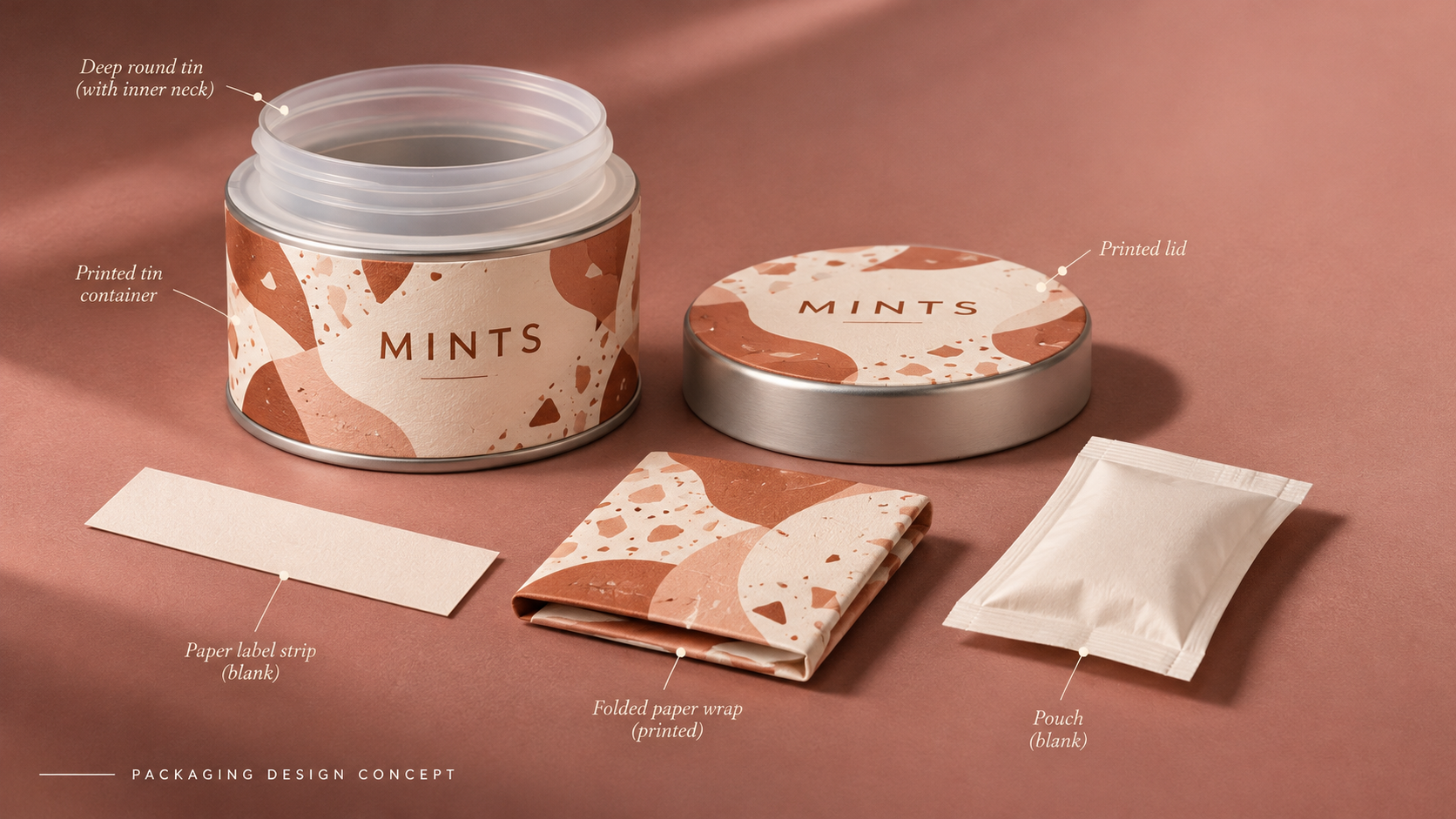

The main body is metal, but the project also includes an insert, liner, label and inner pack. A whole-package material claim cannot be inferred from the body description. Make the actual declaration subject clear before approving public wording.
Choose descriptive scope before making a broader claim
A precise description of an identified component is different from claiming the entire package is plastic-free or recyclable. The latter needs an appropriate evidence and market review. Do not treat an incomplete component list as proof either way. The practical next step is to connect the proposed words to the actual assembly and identify missing composition information.
Claim-scope worksheet
Use this worksheet to structure a project-specific decision. It is not a test standard or acceptance limit.
| Proposed subject | Required project input | Question |
|---|---|---|
| Main container | Body and lid composition reference | Does the wording stay at component scope? |
| Finished assembly | All included components | Which items are not yet identified? |
| Broader environmental statement | Applicable substantiation and scope | Who assesses the actual wording? |
Draw the material boundary
Begin with the exact item supplied to the consumer and distinguish it from transport packaging. List the body, lid, closure parts, insert, liner, label and individual product wrapping where present. Identify which party provides each part. A tin project may involve materials beyond the main container, and the buyer needs a complete picture before selecting claims or deciding what documents to request. The word metal is not a complete bill of materials.
Record contact and attachment
For each component, note its function, what it contacts and how it is attached. Direct product contact and contact with an inner wrapper are different interfaces. A removable insert and a bonded liner also raise different questions for the proposed use. These descriptions help route the document request; they do not establish food-contact suitability or a recycling outcome. Avoid assigning a material solely from a photograph or an informal colour description.
Keep material claims tied to evidence
If a brand wants to describe the package as plastic-free, recyclable or suitable for a particular product, it needs evidence for the relevant configuration and market. Ask the appropriate reviewer what components and conditions the statement covers. A material declaration for one component should not silently become a claim about the finished pack. If the necessary evidence is unavailable, use precise descriptive wording and leave the broader conclusion unresolved.
Update the map when a component changes
A hypothetical supplier proposes an alternative insert for availability reasons. Even if its shape appears unchanged, record the material and attachment changes before deciding what needs rechecking. The same discipline applies when the brand adds a label or inner bag after container approval. Keep the final component map with the approved assembly reference so later claims and document requests describe the package that will actually be supplied.
Make procurement and artwork use the same description
A component map loses value if procurement describes one configuration while artwork describes another. Compare the intended public wording with the actual assembly before the print file is released. For example, a claim about the main container material should not imply that every label, liner or attachment has the same composition. Ask which statement is descriptive and which statement requires substantiation beyond a supplier component list. Keep the evidence request proportionate to that distinction. If the package later changes, assign a person to decide whether the wording also needs review. This prevents an old material claim from surviving automatically after a new component has been introduced for an otherwise reasonable production reason.
Prepare the project handover
Provide the finished-package component map, contact interfaces and proposed public material wording. Highlight any declaration that covers only a constituent part rather than the complete assembly.
| Record | Why it matters |
|---|---|
| Identified configuration | Keeps the discussion tied to actual parts |
| Observation and scope | Separates evidence from an assumed cause |
| Next decision and owner | Makes the unresolved question actionable |
Does a metal container justify a claim about the entire package material?
Not by itself. Include closure parts, inserts, liners, labels and relevant wrapping in the component map before deciding the scope of public wording.
What should happen when an insert material changes but its shape does not?
Record the new material and relevant interfaces. Assign a review of affected documentation and claims rather than assuming unchanged geometry makes the substitution equivalent.