
Mixed-Shape Edibles Look Good in the Tin—Until Someone Takes One Out
Updated:
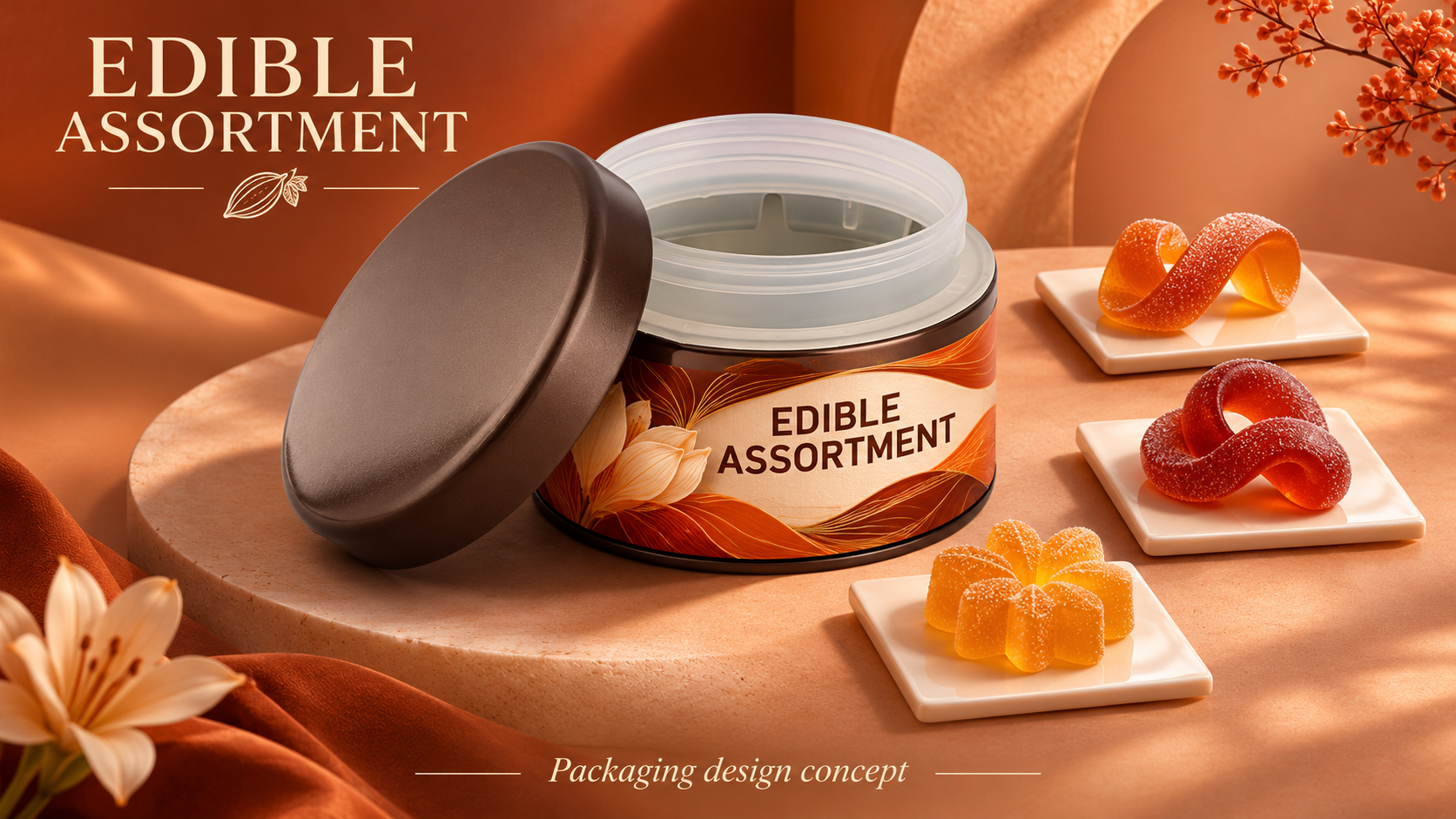

A full sample looks organised: each shape occupies its own place and the assortment matches the presentation image. Then someone removes the first piece. The remaining items move, one variety becomes harder to reach, or the arrangement no longer explains which piece is which. The immediate reaction may be to request a tighter insert. First decide what the layout is actually supposed to preserve.
**Quick answer:** Choose fixed compartments when position has an important role in the product experience and the proposed configuration supports removal. Choose a flexible arrangement when correct assortment and practical access matter more than retaining a display. Neither choice can be approved from the full-pack photograph alone. Compare the proposed pack after individual pieces have been removed, using the actual wrappers and representative product variations.
Identify what stopped working
Three different complaints can sound like “the layout is wrong.” The contents may no longer look tidy; the customer may struggle to remove a piece; or a position-based guide may no longer match the assortment. These do not necessarily call for the same change.
If the issue is appearance alone, ask whether the brand expects the arrangement to remain display-ready throughout use. That is a stronger requirement than looking attractive when first opened. If access is the problem, identify the specific piece and the point at which removal becomes difficult. If identification is lost, establish whether position is being used to communicate variety. A tighter compartment cannot, by itself, settle a confusing identification system.
Compare two complete options, not two empty inserts
Consider an illustrative assortment with a flat wrapped piece and a taller wrapped piece. In option A, each occupies a defined compartment. In option B, the pieces share a less constrained space. This is a hypothetical comparison, not a reported customer case.
Option A gives the designer distinct locations to work with. It also introduces questions about compartment dimensions, wrapper folds and access around each item. A replacement product may affect one position even if the tin body stays unchanged. Option B allows more freedom in how the contents are placed, but a position-specific presentation may be less meaningful after handling or partial use. The brand needs to decide whether it can communicate variety without relying on those positions.
Do not assume that more components automatically produce a better experience. Each proposed component creates a supply, assembly and review task. Equally, removing an insert is not automatically a cost saving once the remaining packing requirements are understood. Compare actual quoted scope rather than assigning invented labour or damage reductions.
Use a decision table to expose the trade-off
Use the comparison below to identify which observation would change the proposed packaging decision.
| Buyer priority | Fixed-position proposal | Flexible arrangement proposal | Evidence that changes the decision |
|---|---|---|---|
| Recognise varieties by location | Defined positions can support the intended map | Location may not remain meaningful | Compare the map with the partially used sample |
| Remove pieces without rearranging neighbours | Review access around each occupied compartment | Review access in the actual mixed arrangement | Observe the difficult item and its withdrawal path |
| Substitute a seasonal shape | Determine which position depends on that shape | Determine whether the new piece changes the whole arrangement | Compare representative old and replacement products |
| Keep assembly scope simple | Include placement and orientation work in the proposal | Define what assortment and orientation still matter | Obtain a comparable packing-scope description |
Check full, partially used and changed assortments
Begin with the intended full assortment, not convenient substitute objects that hide wrapper folds or shape differences. Remove pieces in the intended sequence, then examine the remaining arrangement. If there is no prescribed sequence, try a few project-relevant selections and record which ones reveal a difficulty. These are exploratory observations, not a standardised performance test or a statistical conclusion.
Keep the comparison inputs identifiable. A layout evaluated with smaller pieces should not be presented as equivalent to a second layout holding larger wrapped products. When the products vary, describe the representative range selected by the product owner and the limits of the sample review.
The result may be a revised compartment, a different arrangement, a different access route or a decision that location should not carry the identification task. The purpose of the comparison is to distinguish those choices before selecting a new tin.
Know when a substitution needs more than new artwork
Replacing one edible with another may change the occupied envelope, wrapper fold, intended position or removal action. Map the change to the affected part of the assembly. A local change may justify reviewing one compartment; a changed assortment concept may require reconsidering the layout as a whole.
Keep physical and information changes separate. A revised product description does not establish physical fit. A successful fit observation does not approve ingredient information, material suitability or regulatory content. Those decisions need their own responsible review.
Bring the right next question to the supplier
Send the assortment map, representative wrapped products and an explanation of what must remain true after the first piece is removed. Ask the supplier to compare a defined-position option with an arrangement that prioritises access, including the component and assembly scope of each. This brief is more useful than asking for a “better insert” without explaining the failure.
Should a gift assortment always have individual compartments?
No. Start with whether position serves presentation, identification or another defined purpose. Compare that benefit with access and assembly requirements using the proposed products.
What if the assortment looks less tidy after opening but remains easy to use?
That is a brand-experience decision, not automatically a structural defect. Decide whether persistent presentation is necessary before adding components to preserve it.
Can we change one shape without replacing the tin?
Possibly. Establish which part of the current arrangement depends on the changed product, then review that scope. The unchanged outer size alone does not resolve the question.