
Pre-Roll Tin Won’t Close When Loaded? Check the Pack Before Changing the Container
Updated:
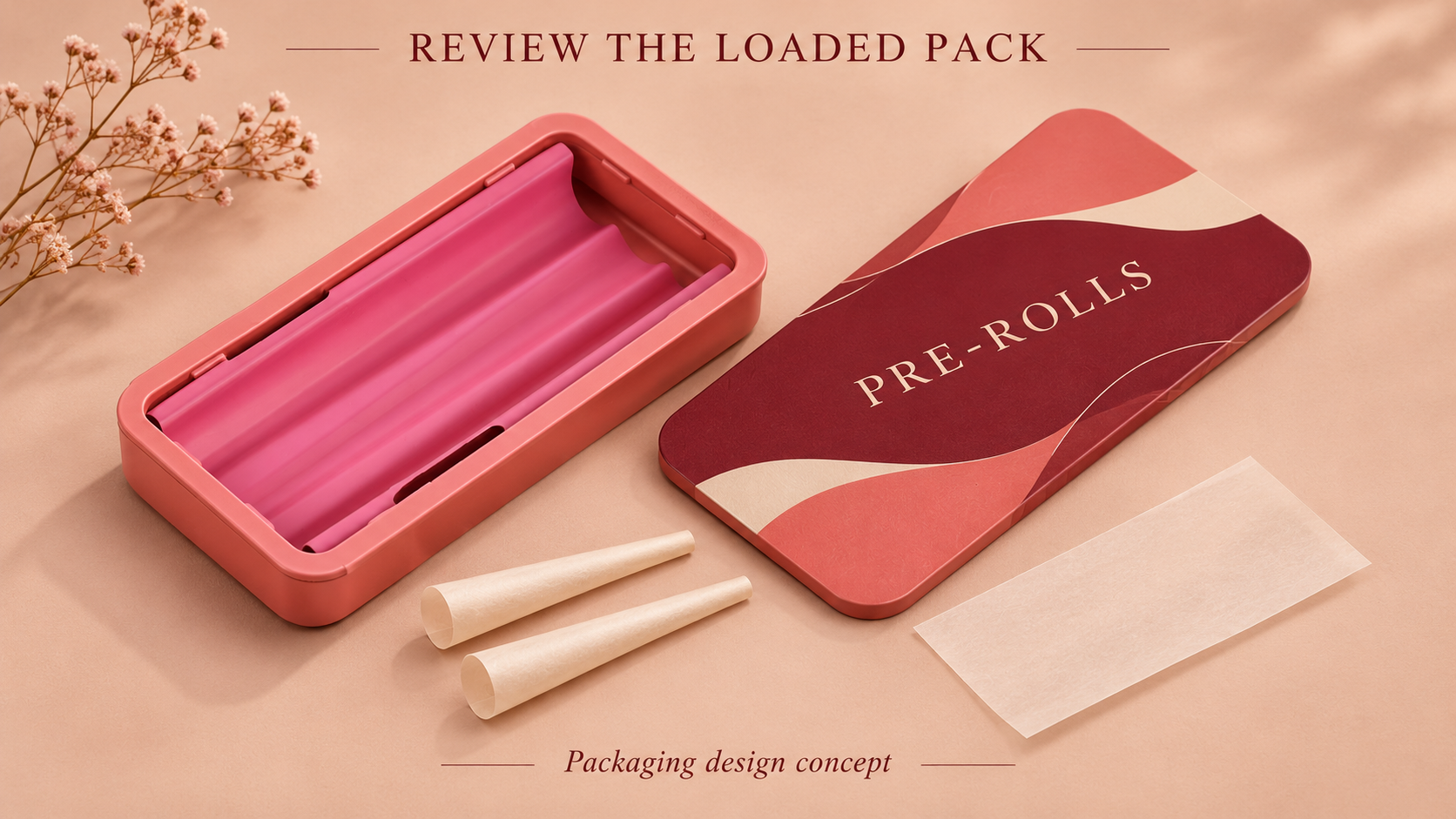

If a pre-roll tin closes empty but will not close as intended after loading, do not approve the empty sample or jump straight to a larger tin. First identify the combination being reviewed: the actual pre-rolls, count, arrangement, wrapping, insert, body and lid. Then separate what you observed from what you think caused it.
The purchasing decision is whether to investigate the container, change the internal arrangement or revise the product-and-pack brief. Each route affects a different part of the project. Choosing one before locating the disagreement can send the next sample in the wrong direction.
The comparison below is an editorial investigation framework. It is not a closure test method, a pass/fail standard or an instruction to force or alter a sample.
Start with the difference between the two samples
“It closes empty” is useful only if empty and loaded observations refer to an identifiable configuration. A different lid, an earlier insert or a changed pre-roll can make the comparison inconclusive.
Put the original approved references beside the sample under review. Identify the body and lid, the insert if present, and the product version. If the pairing is uncertain, resolve that first. Otherwise, a request to change the tin could be based on a combination that was never proposed for the order.
Record the handling sequence and where closing stops behaving as intended. A short video can explain the sequence; a marked photograph can identify a location. Neither supplies a clearance or establishes the cause by itself.
Use observations to choose the next question
Different observations call for different follow-up. The table does not diagnose a defect; it shows which uncertainty to resolve before changing the specification.
Ask the responsible team which comparisons are appropriate for the sample. Keep the original evidence identifiable; do not trim an insert or compress contents merely to obtain a closing photograph.
| Observation in the agreed review | What remains uncertain | Useful next question |
|---|---|---|
| The identified empty assembly does not close as expected | Whether the body/lid pairing and sample condition match the proposal | Can the supplier review this assembly against the intended references? |
| The empty assembly closes, but the proposed insert arrangement does not | Which component or placement differs from the reviewed configuration | Which insert reference and installation were used, and what should be reviewed next? |
| The arrangement changes when intended contents are added | How the actual product, wrapping and layout interact with the proposal | Does the supplied product represent the dimensions and packed state used for the layout? |
| Only one product variant presents the problem | Whether that variant was included in the common-pack decision | Should that variant have its own arrangement or be excluded from the shared configuration? |
| Different reviewers report different behaviour | Whether they used equivalent products, components and handling | Can both records be tied to the same references and conditions? |
A larger tin is one option, not the conclusion
Once the disagreement is defined, compare the change routes against the actual requirement.
Keeping the proposed body and reviewing the internal arrangement may be worth considering when the outer format matters to a gift set or retail presentation. That route still requires a supported layout and a review of access and closing; it should not be presented as a guaranteed fix.
Evaluating another body may be appropriate if the current proposal cannot accommodate the agreed contents and use requirements. Ask which sample, artwork, secondary packing and quotation items would change. A new body changes the proposal; it does not automatically settle every earlier question.
A separate configuration for one variant may be preferable to making the whole range follow an exception. Compare the extra configuration identity and order scope with the work required to maintain a common pack. Do not assume one route is cheaper without comparable proposals.
Example: one sleeved variant fails the common-pack review
Consider a hypothetical five-pack project. The buyer discusses the proposed arrangement using unsleeved pre-rolls. Later, one variety is supplied in individual sleeves, and the loaded sample no longer closes as expected.
The useful conclusion is not that the tin is defective or that sleeves always need another size. The packed form used in the latest review differs from the earlier brief.
Update the product reference and identify which sleeve features and arrangement the next proposal must account for. Ask the supplier to review the sleeved variant, then compare a revised internal arrangement with a separate configuration if both are proposed. Leave the unaffected variants identifiable rather than reopening them without a reason.
This makes the next sample answer a specific question: does the revised proposal address the agreed sleeved configuration while preserving the intended access and closing behaviour?
Send a revision request that can produce a decision
“Please make the box bigger” commits to a solution before the review. A more useful request is:
> In sample [reference], the identified empty assembly closes as demonstrated, but the configuration containing [product revision, wrapping and count] does not close as intended. The attached record shows the arrangement and the point where the behaviour differs. Please review the references and propose the next comparison. If another configuration is suggested, identify the affected insert, artwork and quotation items.
The next response should identify what will be reviewed, who supplies the missing input and which decision the result will support. Keep the sample status open until that scope is clear.
Start with the observed difference
For a packaging discussion, send the sample reference, packed-product version, empty-versus-loaded observation and a marked record of the sequence. These four inputs give the next discussion a defined starting point. The pre-roll application page can support initial product-family research; it is not proof of fit for the sample in question.
Can reducing the pack count solve the problem?
It is a different sellable configuration, not a correction the supplier should assume. If the brand is willing to consider it, compare the product offer and layout explicitly. Otherwise, retain the intended count as a requirement.
Should we approve the artwork while the fit issue is open?
Identify which artwork decisions depend on the unresolved configuration. Content work may continue provisionally, but do not label a different body layout or physical sample as approved without its own review.
Does a sample that closes prove child resistance or airtightness?
No. This investigation organises observations about a proposed loaded pack. Any child-resistance or barrier claim needs its own relevant evidence and review.