
A Promotion Sticker Covers the Wrong Place: Compare the Information and Opening Effects
Updated:
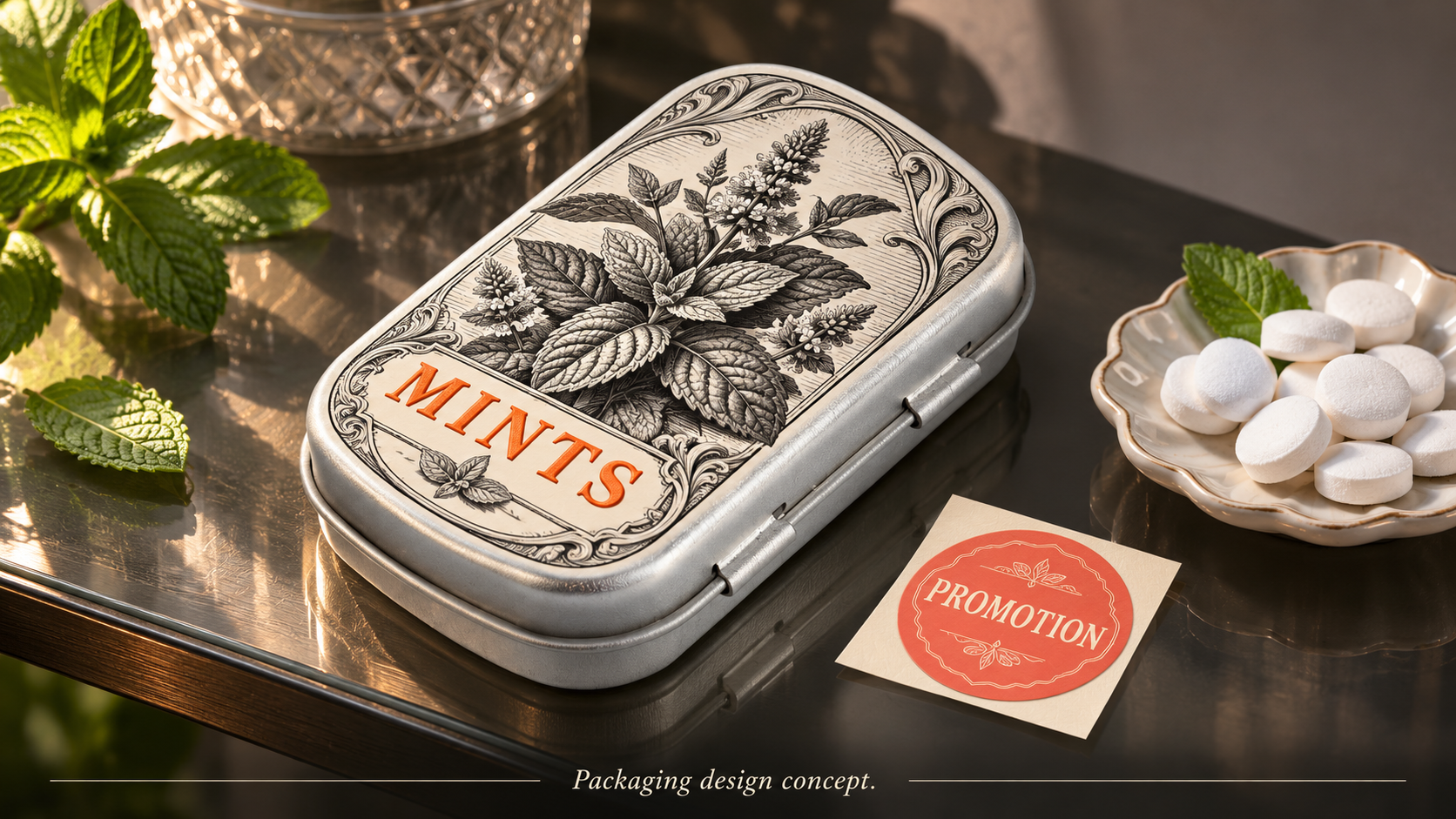

Treat a retailer's added sticker as another information-bearing component. If it covers the variety name or crosses an opening feature, diagnose that interaction before changing the underlying tin artwork.
Match the symptom to a proposal
Start with the observed effect: hidden information, an obstructed action or an unresolved removal task. Each points to a different placement or ownership question; changing the base artwork before identifying the effect can leave the actual problem untouched.
| Symptom | Candidate response | Separate question |
|---|---|---|
| Key content is obscured | Different position, size or promotional layout | Responsible content review |
| Intended opening is affected | Review placement on the assembled package | Actual handling evaluation |
| Temporary removal is required | Define removal task and material proposal | Behaviour cannot be established digitally |
| Retailers use different messages | Version-specific application instructions | Who applies and checks each one? |
Assign the change to its actual owner
Hypothetically, the retailer supplies a campaign sticker but the brand controls the base design. Ask which element should change and who can authorise it. Automatically rewriting the tin artwork may solve the wrong part of the problem.
Show the actual body and lid references in the proposed placement. A flat mock-up can illustrate location while leaving application and removal behaviour unresolved. This tool establishes no adhesive compatibility, surface result or mandatory-content conclusion.
Keep the final offer readable
If the promotion changes, review the image and description that represent it. A common base tin does not make every promotional assembly identical. Record the accepted version and application location rather than issuing an ambiguous latest sticker instruction.
Send the sticker purpose, proposal and application responsibility through the engineering inquiry. Consult tin families for base-format context.
Does base-artwork approval cover a later sticker?
Not automatically. Identify the changed content, placement and material questions that need review.