
Tea Samplers: Fixed Flavour Set or Random Discovery Pack?
Updated:
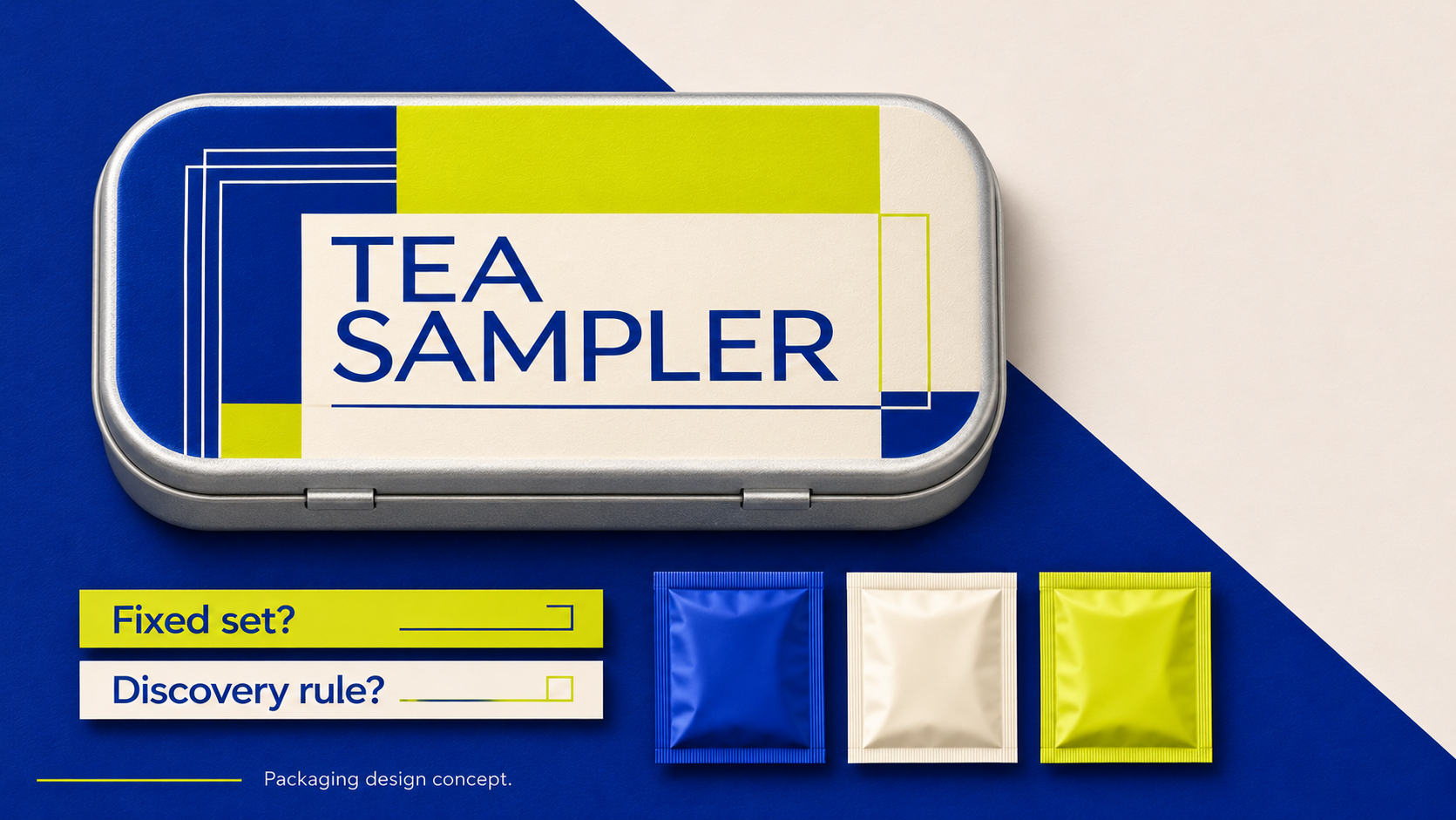

One flavour in the advertised tea sampler is unavailable. Filling the gap with another tea may complete the tin physically while changing what the customer was promised. The next decision belongs to the offer definition before it belongs to the packing layout.
Fixed contents and variable exploration are different offers
An exact named set requires an accepted contents list. A discovery pack can allow variation only within a defined selection rule and reviewed consumer description. Converting the first into the second is a deliberate offer change; it is not a packing workaround. A supplier may propose alternatives, but availability does not supply authority to change the product promise.
Substitution decision card
Use this worksheet to structure a project-specific decision. It is not a test standard or acceptance limit.
| Offer type | Missing flavour means | Next owner decision |
|---|---|---|
| Exact named set | Proposed departure from contents list | Accept revision or preserve original offer |
| Bounded discovery pack | Check permitted selection range | Apply the actual accepted rule |
| Ambiguous assorted wording | Commercial promise remains unclear | Define the offer before assembly |
Write an allowed-change record
For a discovery proposal, identify the permitted selection range and the owner who can change it. This is a purchasing record, not a legal determination about product descriptions. Have the relevant content reviewer assess what the proposed package and listing say. A flexible assembly plan should not silently contradict artwork that names a fixed set of flavours.
Resolve a shortage scenario
Imagine one flavour in a named sampler becomes unavailable. Replacing it with another tea may fill the physical space but changes the exact-set proposal. Ask the commercial owner whether the replacement is accepted and the content owner what information needs review. If the brand wants to convert to a discovery offer, record it as a deliberate offer revision rather than treating the substitution as invisible.
Release the offer and the assembly instruction together
Identify the accepted offer version, content reference and selection instruction. State which changes need another decision and who receives the update. This makes the purchasing outcome specific enough for a supplier or co-packer to understand without pretending that a generic sampler template applies to every brand. Market-specific consumer information remains a separately owned review task.
Prepare the next decision
Define the fixed or variable sampler offer and name who may authorise an assortment change before requesting the assembly proposal.
Can a random pack use artwork naming exact flavours?
Have the responsible content owner compare the wording with the actual offer. Do not assume a physical assortment or marketing theme resolves that relationship.
Who may choose a substitute tea?
Name that authority and its permitted scope in the project record. An assembly operator should not have to infer commercial permission from an available space in the tin.