
Marks on a Vape Device After Unpacking: Find the Stage Before Changing the Insert
Updated:
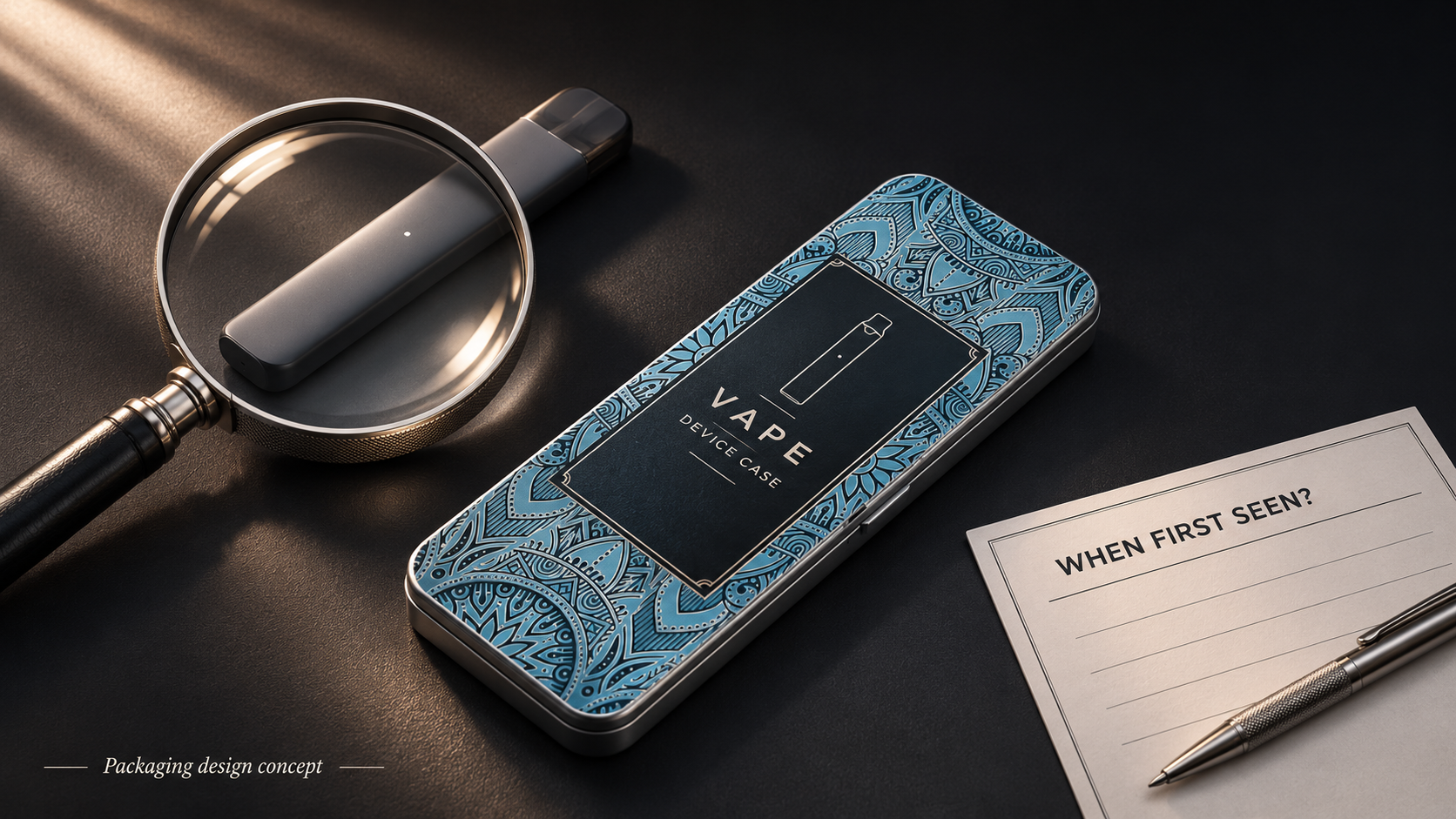

A mark found at opening does not prove that the insert caused it. It may be an apparent reflection, removable material, or a surface change whose first appearance was never observed. The buyer’s first decision is therefore not which replacement material to order. It is whether the available evidence can distinguish when the observation appears and which controlled comparison should come next.
First separate an observation from an explanation
Keep the device and its packing components together and identify the marked area. Photograph it under consistent viewing conditions, including an unaffected area where useful. Do not clean, polish or repeatedly rub the surface before the responsible reviewer decides what evidence should be retained. Such actions can change the thing being investigated.
Use neutral descriptions: a line near the connector end, a dull area beside a support point, or visible residue after removal. Calling it an abrasion, chemical reaction or material transfer adds an explanation that may not yet be supported. The distinction matters because those explanations lead to different investigations and potentially unnecessary packaging changes.
What is the last stage known to be clear?
Look for an identifiable observation before loading, after loading, after storage and after the relevant handling or delivery stage. The purpose is to narrow the interval in which the mark was first seen. A device photographed before wrapping cannot automatically represent its condition after another operation occurred.
When there is no earlier observation, say that the origin is unknown. Do not reconstruct a clean starting condition from memory. Preserve the returned evidence, then arrange a prospective comparison with identified devices and packaging. A new trial can help investigate a suspected route; it does not retroactively establish what happened to the returned unit.
Compare the location with possible contact routes
Review the complete assembly rather than the insert alone. A loose connector, a card edge, protective wrapping or a loading action may approach the same surface. Identify intended supports and observed contacts separately. A mark near a cavity edge is a reason to inspect that relationship, not enough to name it as the cause.
Inspect both placement and removal. A pack may appear separated at rest while the device passes a feature during extraction. This does not mean extraction caused the returned mark, but it can identify a comparison worth making. Avoid repeating a potentially damaging movement on the only retained sample; the reviewers should choose how to preserve evidence and investigate safely.
| Evidence state | Next comparison | Conclusion still unsupported |
|---|---|---|
| No observation before packing | Prospective identified sequence | Origin of the returned mark |
| Accessory can reach marked area | Separated versus original placement | That accessory caused every incident |
| Mark follows a loading observation | Compare loading routes with controlled inputs | Validated field damage rate |
| Result changes after several revisions | Separate changes or label exploratory trial | Single confirmed root cause |
Which alternative should be tried first?
If a loose accessory visibly reaches the affected area, compare a separated accessory arrangement before replacing every insert component. If the loading action creates an unresolved contact, compare an alternative loading path. If the suspected relationship remains at a defined support surface, the material and geometry at that interface may deserve a separate review.
Changing material, cavity shape and packing method at once may produce a better-looking sample without revealing which change mattered. That may be acceptable for an exploratory concept, but it should not be reported as a confirmed root-cause finding. Identify the purpose of the trial: screening alternatives, investigating a suspected route, or validating a proposed production arrangement.
Keep observations comparable
Use identifiable product and component references, the same observation approach, and a planned order of checks. Record handling and storage conditions relevant to the question rather than borrowing an arbitrary duration or cycle count from an unrelated online guide. The responsible technical reviewers must choose methods and acceptance criteria appropriate to the surfaces and intended claim.
An informal comparison can support a decision to investigate further. It cannot establish an abrasion rating, predict the proportion of affected customer deliveries, or demonstrate chemical compatibility. Those conclusions need evidence designed for that purpose. An unaffected comparison sample is useful only within its known history; it is not proof that an entire batch is unaffected.
How the result changes the purchasing decision
If the observation appears before packing in a prospective comparison, investigate that upstream interval before charging a packaging revision to the project. If it appears after a repeatable contact in a defined configuration, review the relevant interface and alternative arrangement. If it is not reproduced, retain the uncertainty and review differences between the trial and the returned pack.
A hypothetical kit may show no marks with its cable restrained and a visible contact when the connector is loose. That comparison can justify evaluating restraint or separation; it does not prove the history of every returned unit. Any revised packing configuration still needs approval for fit, access and other applicable requirements.
Bring the affected assembly, an available comparison and the last reliable observation to a LOCK & ROLL discussion. State which question you need the next trial to answer, rather than asking the supplier to guarantee that a material substitution will eliminate an unexplained mark.
Should visible residue be wiped away immediately?
Preserve its observed condition until the responsible reviewer decides what evidence is needed. A cleaning action can change the observation and complicate later interpretation.
If a trial does not reproduce the mark, is the packaging cleared?
Not automatically. Compare the trial history and conditions with the returned assembly, identify missing observations, and state the remaining uncertainty rather than declaring a universal result.