
The New Vape Variant Has the Same Length but Does Not Fit the Shared Insert: Why?
Updated:
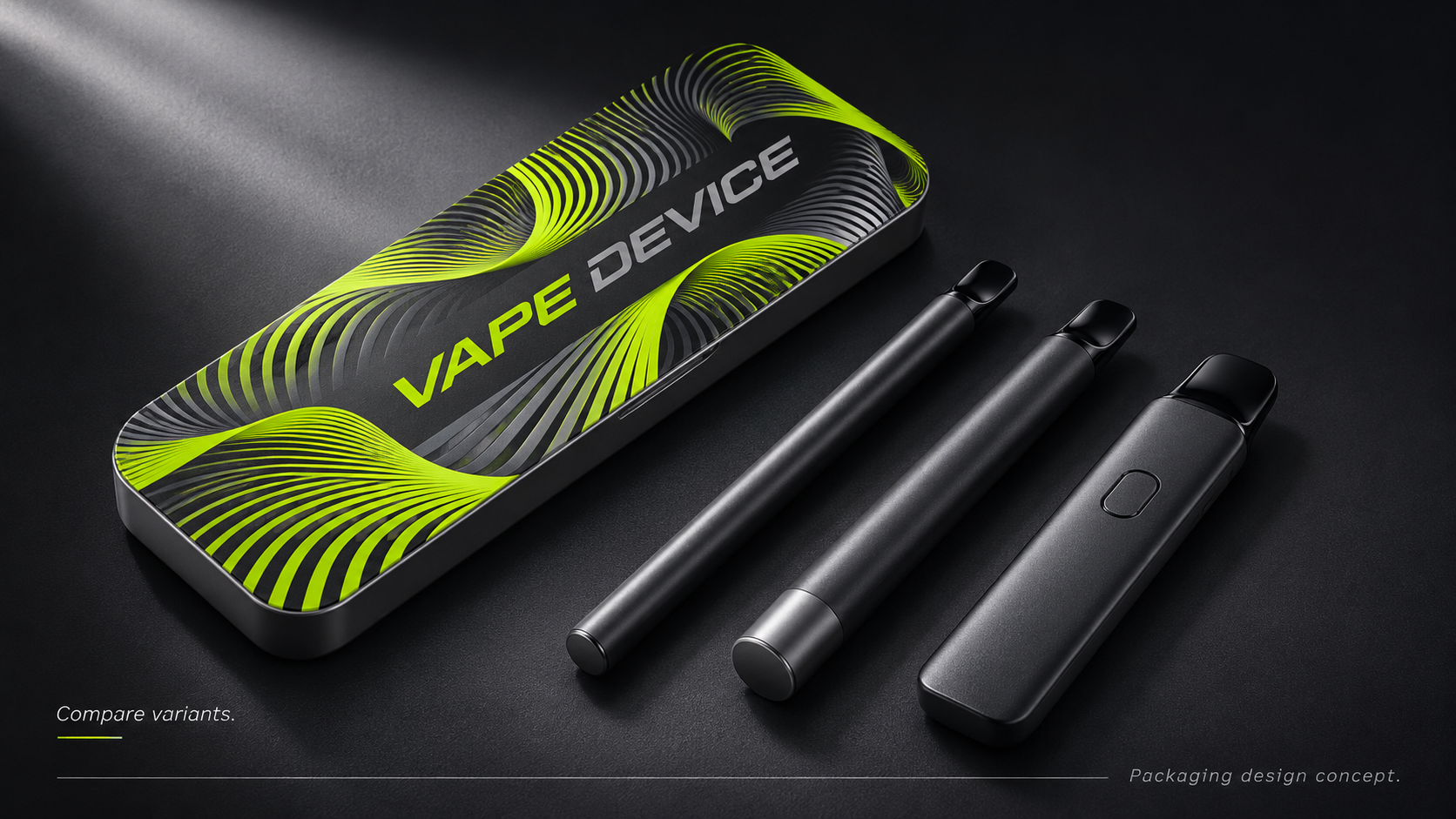

Compare the geometry that supports, locates and releases the device, not just its largest nominal dimensions. Two variants can share length while differing at a connector, cover or grasp region. Identify those differences before deciding whether to share a body, share an insert or keep separate assemblies.
Choose the next question from the observed conflict
If only decoration changes, have the product owner establish whether the packed form is physically unchanged. If a cover or local feature differs, map it to the affected contact and removal task. If different inserts are proposed, compare their selection and identification work with distinct complete assemblies. Fewer visible tin shapes do not prove a simpler or cheaper programme; actual scope and quotes are needed.
| Situation | Next question or route | Limit |
|---|---|---|
| One complete common arrangement | Review every intended variant scope | Marketing family name is not fit evidence |
| Shared body with different inserts | Map variants explicitly | Separate component identities remain |
| Separate assemblies | Compare operational clarity and full scope | Do not presume a cost penalty or saving |
Build a physical variant register
List each sellable device reference and identify the dimensions or features that differ. Include covers, buttons, display faces and individually wrapped forms. Mark which references are final and which are prototypes. This prevents a sample of the easiest variant from silently standing in for the whole product family.
Separate common features from exceptions
Compare the locations that support and locate the product, not just its largest bounding dimensions. Two variants may share a maximum length while differing around a grip or connector. Ask whether the proposed common insert makes the intended contact with each variant. If an exception requires another component, identify it as a separate configuration rather than hiding it in packing notes.
Consider the operational cost of similarity
Nearly identical inserts can be harder to distinguish than clearly different ones. Evaluate how the correct part will be selected and checked. A common tin with variant-specific inserts may offer one route; distinct assemblies may offer another. Compare the actual order mix and approval burden before deciding that fewer packaging references always means lower total cost.
| Review item | Information to retain |
|---|---|
| Variant | Sellable part and sample identity |
| Difference | Support, cover and access features |
| Configuration | Shared or variant-specific insert |
| Coverage | Reviewed references and exclusions |
Check how packers will select the insert
When the support and withdrawal paths match, review all variants in the same candidate insert. When one variant needs a different insert, ask the packer to select each insert using the markings on the supplied parts. If the markings are easy to confuse, compare separately identified assemblies before choosing what to quote.
Can the largest device represent every variant?
Not automatically. Other variants can differ at the surfaces that locate or release the product.
Is one tin reference the same as one assembly?
No. Inserts and other components may create several distinct assemblies.