
The Returned Vape Sample Has Conflicting Comments: Which Change Should the Next Sample Show?
Updated:
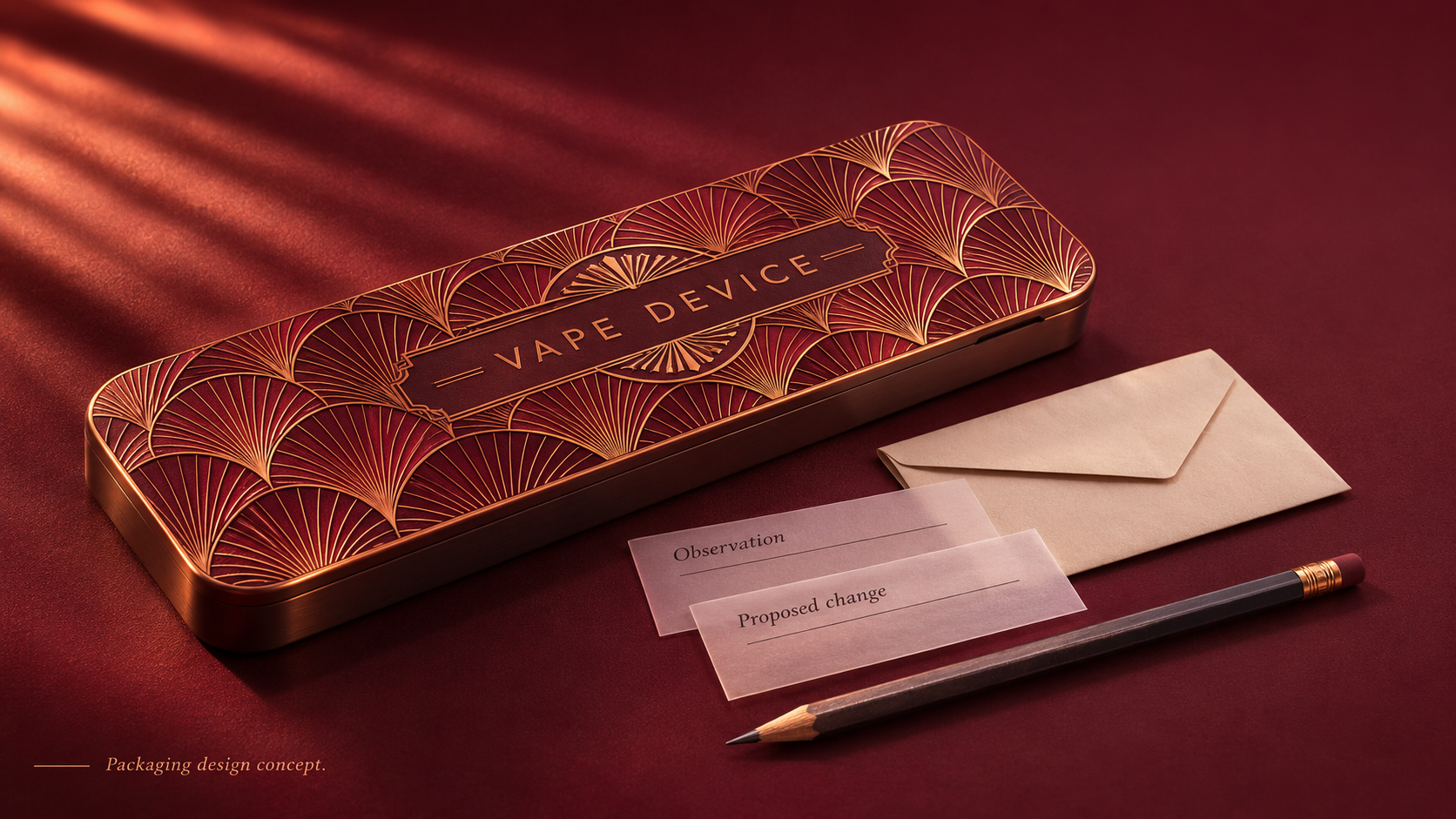

Preserve the observed problem separately from the proposed modification, then reconcile conflicting requests before issuing the next sample brief. A marked dimension can hide the original task it was intended to solve. The useful decision is which complete proposal the team wants to evaluate next.
Choose the next question from the observed conflict
If marketing wants more concealment while operations needs an accessible grasp, present both objectives together. If a requested change moves the device, identify the closing and card-position questions it may affect. If a comment has no clear owner or purpose, clarify it before combining it into the next drawing. Do not ask the supplier to create a hybrid that no reviewer actually intended.
| Situation | Next question or route | Limit |
|---|---|---|
| Observation without proposed solution | Request candidate responses | Do not invent a dimension from a vague concern |
| Competing requested changes | Assign a reconciled decision | Supplier should not choose priorities silently |
| New sample changes adjacent tasks | Define the next review scope | An open photograph does not approve closure |
Identify what came back
Record the tin, insert, device, accessory and artwork references present in the returned pack. Note missing components and any changes made during the buyer review. A handwritten comment on an unidentifiable insert is difficult to translate into a controlled revision, particularly when several sample versions were sent.
Separate observations from instructions
The observation may be that the device is difficult to remove. The requested instruction might be to add a recess. Keep both in the record so engineering can evaluate whether the proposed change addresses the observed problem. Do not erase the original concern by replacing it with a dimensional adjustment that has no stated purpose.
Resolve conflicting reviewer comments
Marketing may ask to conceal more of the device while operations asks for easier access. Identify the responsible decision owner and present the competing requirements together. Sending separate marked samples to the supplier can create an accidental hybrid of comments that no reviewer actually intended to approve.
| Review item | Information to retain |
|---|---|
| Identity | All returned component references |
| Observation | What happened and under what conditions |
| Decision | Owner and resolved revision request |
| Next sample | Checks to repeat and decisions retained |
Send one comparison the supplier can build
Use the same device and card and name the starting insert revision. If the open decision is concealment versus access, request two labelled proposals and specify which requirements each must retain. Compare grasp, card position and closing before approving a drawing revision.
Does returning a marked sample approve the change?
No. State whether it is feedback, a revision request or an approved reference.
Can several reviewers mark separate samples?
They can provide feedback, but reconcile the instructions before releasing a controlled revision.